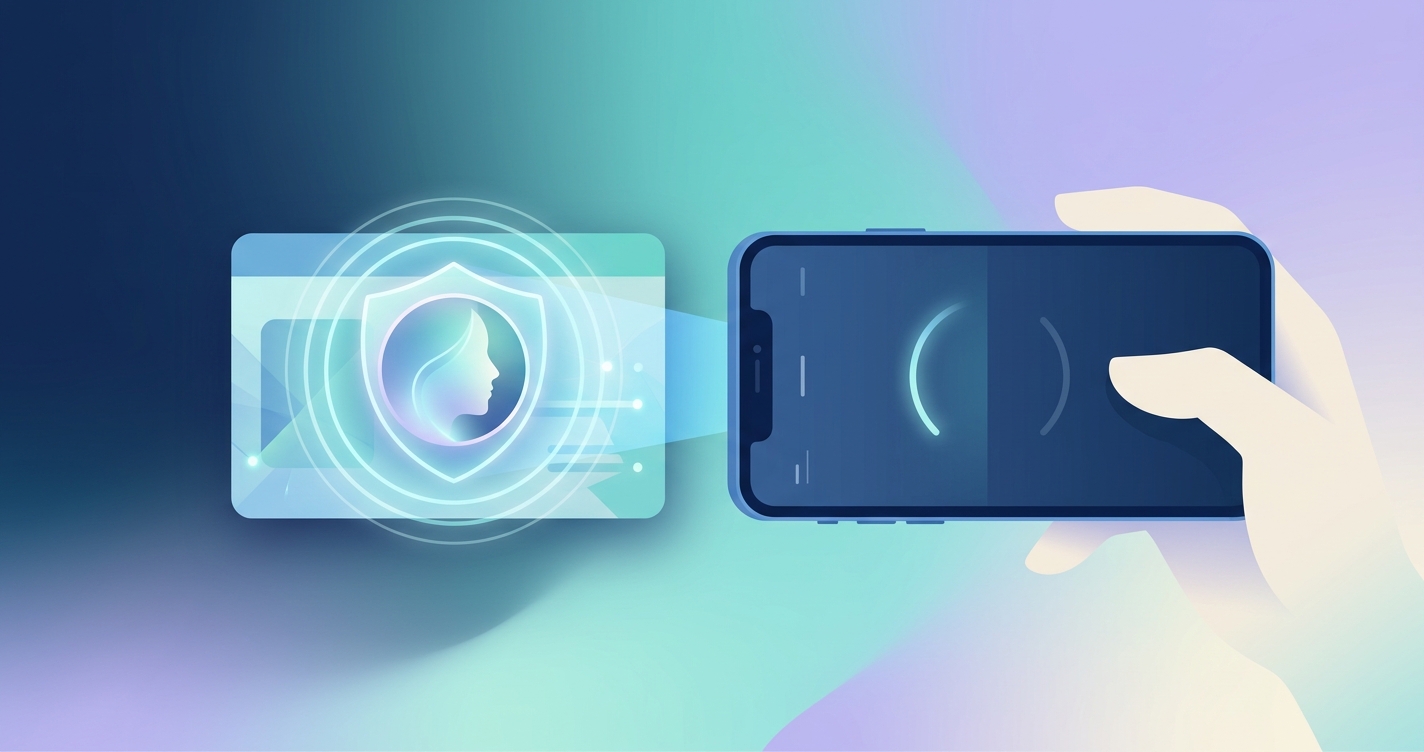

Why do some apps need to see my heartbeat to know it's really me?
How heartbeat identity verification and rPPG let identity platforms confirm a live human passively, without blinks or head turns, for CISO and eKYC teams.
Insights on health technology, vitals monitoring, and wellness from the UseFaceScan team.

How heartbeat identity verification and rPPG let identity platforms confirm a live human passively, without blinks or head turns, for CISO and eKYC teams.

How presentation attack detection and passive liveness prevent fake accounts with face scan technology during eKYC onboarding and remote identity proofing.

How a secure government ID scan works on mobile: passive liveness, document authentication, and the security controls protecting remote identity proofing.

Why an old age verification photo cannot pass modern liveness checks, and how presentation attack detection separates a live human from a static image.

How presentation attack detection helps CISO teams and identity platforms protect online identity theft against deepfakes, spoofs, and injection attacks.

A moving selfie is a liveness check used to verify a real person online and block photos, replays, and deepfakes during onboarding.

Learn how financial institutions use advanced Presentation Attack Detection (PAD), including texture analysis and rPPG, to distinguish live users from printed photos or digital screens.

Explores the common technical and user-experience reasons why face verification fails, from poor lighting to presentation attack detection and liveness checks.

Explore whether AI-generated faces can fool modern face scan liveness detection and learn about the passive biometric technologies that secure against deepfakes.

Understand the technology used to verify your identity and distinguish a live person from a deepfake or presentation attack during a remote camera scan.

Learn why a scammer who stole your face photos from social media can't defeat modern identity verification systems that use passive liveness detection.

As deepfake fraud rises, understanding the security of online identity verification is crucial. Learn the difference between a risky photo upload and a secure selfie video liveness scan.

Learn why holding up a photo or a video replay fails modern liveness checks and how banks prevent fake face open bank account fraud with presentation attack detection.

Learn how advanced identity verification uses real-skin signals like blood flow to perform deepfake of my face detection, stopping digital impersonation.

Injection attacks bypass on-device liveness by injecting deepfakes directly into the API. Learn why API-level liveness is critical for enterprise identity security.

Learn why apps ask to scan your face during signup. Understand the role of passive liveness detection in preventing fraud and ensuring you are a real, live user.

A comprehensive checklist for CISOs and identity platform providers to assess liveness detection vendors, focusing on security, compliance, and user experience.

A CISO's guide to evaluating biometric liveness vendors in the context of a Zero-Trust security model, focusing on key technical and compliance criteria.

A research-style analysis of Presentation Attack Detection (PAD) in mobile SDKs, comparing the security models of Android and iOS for enterprise identity teams.

A guide to implementing remote identity proofing for benefits enrollment, balancing fraud prevention with equitable access for all applicants.

State DMVs are adopting biometric liveness detection for remote identity proofing to combat fraud and improve citizen services. Learn how this technology works.

High drop-off rates plague identity verification funnels. Discover how passive biometrics can reduce user friction, improve conversion, and strengthen security.

A detailed comparison of ISO/IEC 30107-3 and NIST's FATE PAD testing framework for evaluating presentation attack detection in enterprise identity verification.

A wave of new regulations requires enterprises to verify user age. Learn how passive liveness detection is helping regulated industries comply with these mandates.

A research-style report for CISOs on architectural patterns for managing identity and access in complex, multi-cloud enterprise environments.

A research-style report on meeting NIST 800-63A standards for remote identity proofing using passive liveness detection to prevent presentation attacks.

A research-style report on the methods, standards, and technologies used for remote healthcare patient identity verification to prevent fraud and ensure compliance.

The shift to Zero Trust security isn't just about perimeters; it's an identity revolution. Learn how rPPG liveness detection provides the missing link for continuous, passive authentication.

A comparison of passive vs active liveness detection, analyzing the trade-offs between user experience (UX) and security for enterprise identity verification.

Learn how enterprise SSO with biometric liveness is revolutionizing enterprise security, offering a more secure and user-friendly alternative to traditional authentication methods.

The global gaming market is a prime target for fraud. Discover how gaming platforms verify real players with liveness detection to combat account takeovers and bots.

Liveness detection API integration for developers: architecture choices, latency tradeoffs, standards, and the signals teams need before shipping remote identity proofing.

A research-level analysis of how financial regulators view biometric liveness technology in AML, KYC, PSD2, and remote onboarding oversight.

A research-level explanation of presentation attack detection ISO 30107 standards, testing terms, and what enterprise identity teams should evaluate.

A research-level analysis of remote identity proofing for government services, covering the technical architecture, standards framework, presentation attack detection requirements, and deployment considerations for CISOs and government identity architects.

A research-level breakdown of passive liveness detection technology for CISOs and identity platform architects evaluating presentation attack defense strategies.

Architecture-level analysis for identity platform providers and CISOs evaluating how to integrate liveness detection into existing identity verification infrastructure.

A research-level analysis of how to architect frictionless onboarding liveness detection flows that maximize conversion while maintaining presentation attack defense, written for CISOs and identity platform architects.

A procurement-focused analysis of enterprise identity verification for CISOs evaluating biometric liveness, document verification, and presentation attack detection technologies.

A research-level analysis of how eKYC platforms integrate passive biometric liveness detection to combat presentation attacks, reduce onboarding friction, and satisfy regulatory mandates across financial services and regulated industries.