How Healthcare Platforms Verify Patient Identity Remotely
A research-style report on the methods, standards, and technologies used for remote healthcare patient identity verification to prevent fraud and ensure compliance.
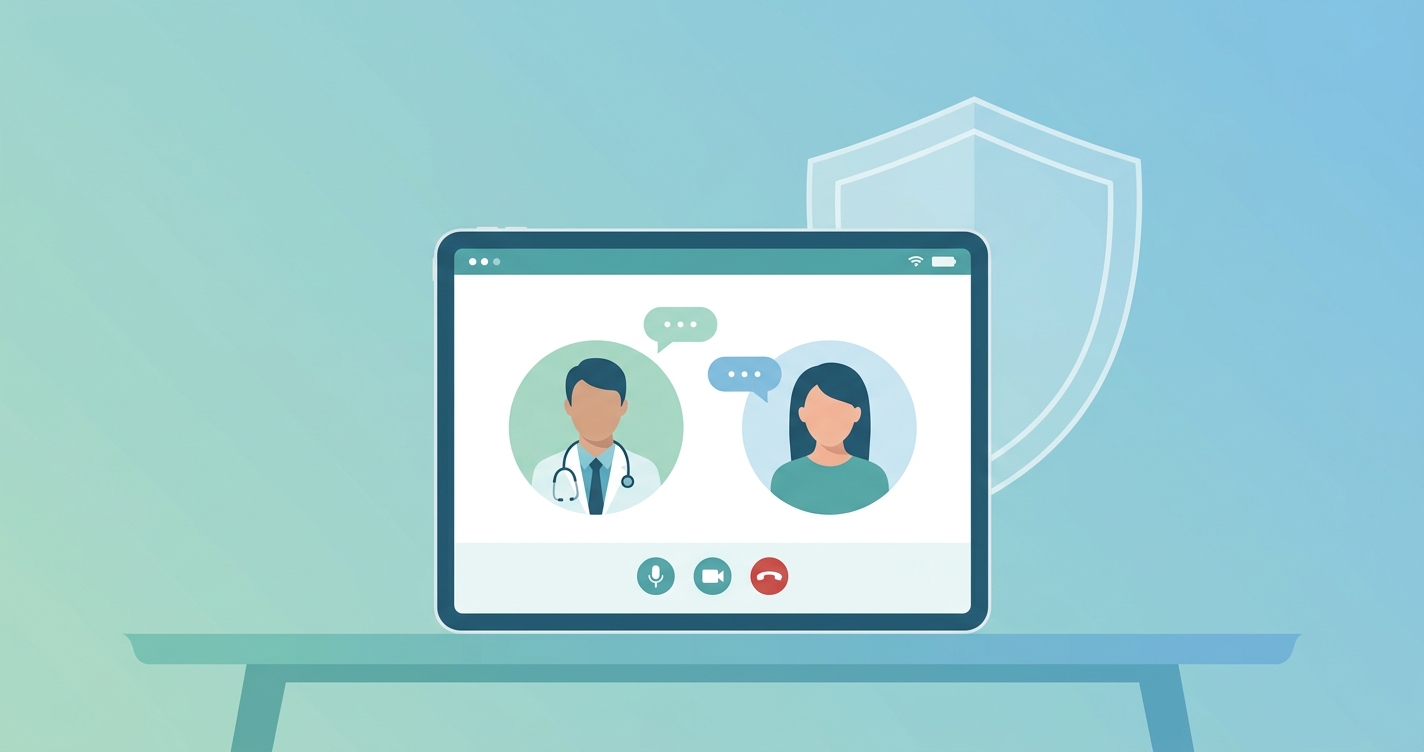
The rapid expansion of telehealth and digital health services has created a significant challenge for providers: how to securely verify patient identity from a distance. As virtual care becomes a permanent fixture in the healthcare ecosystem, the risk of fraud, identity theft, and non-compliance with regulations like HIPAA has escalated. Platform providers and CISOs are now tasked with implementing robust systems for healthcare patient identity verification remote from the clinical setting. This requires a move beyond simple username and password combinations to more advanced, fraud-resistant technologies capable of establishing trust in a digital-first environment.
"An Office of Inspector General (OIG) report identified 1,714 high-risk providers who billed Medicare for $127.7 million in potentially fraudulent telehealth services during the first year of the COVID-19 pandemic, highlighting the immense financial and security risks of inadequate remote identity proofing." - U.S. Department of Health and Human Services (2022)
Remote identity proofing in healthcare
The core of secure digital health is reliable healthcare patient identity verification remote from a traditional, in-person setting. This process, often called remote identity proofing (RIP), involves establishing and verifying an individual's identity through digital means. The National Institute of Standards and Technology (NIST) provides the foundational guidance in its Special Publication 800-63-3, "Digital Identity Guidelines." While not a healthcare-specific regulation, these guidelines are considered the gold standard for federal agencies and are widely adopted in the private sector as a best practice for meeting HIPAA's "reasonable and appropriate" security requirements.
NIST outlines a risk-based approach, categorizing identity proofing into different Identity Assurance Levels (IALs). For healthcare, where sensitive Protected Health Information (PHI) is at stake, a high level of assurance is required. This means simply asking for a name and date of birth is insufficient. Modern healthcare platforms must combine several methods to confidently link a digital identity to a real, unique individual. The process typically involves three steps:
- Resolution: Collecting and linking all claimed attributes to a single person.
- Validation: Verifying the accuracy of the collected identity evidence.
- Verification: Confirming the digital identity holder is the same person proven in the previous steps.
This final step is where technologies like biometric liveness detection become critical, as they protect against presentation attacks where an imposter uses a photo, video, or mask of the real patient.
| Verification Method | Description | Strengths | Weaknesses |
|---|---|---|---|
| Knowledge-Based Authentication (KBA) | Asks "out-of-wallet" questions from public/private data (e.g., "On which of these streets have you lived?"). | Low friction for users. | Ineffective; answers are often found online or on the dark web. |
| ID Document Verification | User uploads a photo of a government-issued ID (e.g., driver's license, passport). The system uses OCR and AI to check for tampering. | High assurance when the document is authentic. | Susceptible to high-quality fake documents and presentation attacks (showing a photo of a document). |
| Biometric Verification | Compares a live biometric sample (e.g., a selfie) against the photo on the government ID. | Strong link between the person and the document; difficult to fake a face. | Requires a "liveness" check to prevent presentation attacks using photos or deepfakes. |
| Passive Liveness Detection | Analyzes a selfie video or image for subtle physiological signs of a live person (e.g., color changes from blood flow) without requiring user actions. | Highest security against presentation attacks; frictionless user experience. | Requires more sophisticated camera and processing capabilities; higher technical barrier to implement. |
Industry Applications
The need for robust healthcare patient identity verification remote capabilities spans the entire digital health landscape. Different platforms face unique threat models and regulatory pressures, driving adoption of these technologies.
Telemedicine Platforms
Telemedicine providers are on the front lines of remote patient interaction. To prevent fraud, ensure accurate medical records, and comply with state-level regulations, they are increasingly integrating document and biometric verification into their onboarding flows. This ensures the person receiving care is the same person who is insured and whose records are being accessed, preventing a range of fraudulent activities from prescription abuse to insurance fraud.
Digital Pharmacies
Online pharmacies that prescribe and ship medications have an even higher burden of proof. Verifying patient identity is a critical step in preventing fraudulent prescriptions for controlled substances and ensuring compliance with the Ryan Haight Act. Liveness detection is particularly important here to prevent a single actor from creating multiple fake accounts to acquire prescriptions.
Patient portals and health systems
Health systems are using remote identity proofing to grant patients secure access to their electronic health records (EHR) through patient portals. This empowers patients to manage their health information, but only if the system can ensure the person logging in is truly the patient. By adopting NIST-aligned identity proofing, health systems can reduce their reliance on easily compromised methods like KBA and provide more secure, remote access to sensitive data.
Current research and evidence
The field of remote identity proofing is constantly evolving to counter new threats. The upcoming revision of the NIST guidelines, SP 800-63-4, signals a move towards even stronger protections. Research from institutions and standards bodies focuses on combating sophisticated presentation attacks. For instance, the ISO/IEC 30107 standard provides a framework for testing and certifying the effectiveness of Presentation Attack Detection (PAD) mechanisms. Researchers like W. S. Yambay and Stephanie Schuckers at Clarkson University (2020) have published extensive work on the vulnerabilities of biometric systems to various presentation attacks, driving the industry toward more robust liveness detection methods. The current evidence points to a clear trend: methods that are passive and analyze intrinsic human characteristics are more secure and offer a better user experience than active methods that rely on user actions.
The future of remote patient verification
The future of healthcare patient identity verification remote from the clinic will be defined by two key trends: seamlessness and security. Expect to see wider adoption of passive liveness detection, which verifies a user's presence without requiring them to perform specific actions like blinking or smiling. This creates a frictionless and more inclusive experience. Secondly, decentralized identity models, using technologies like verifiable credentials, are gaining traction. This would allow a patient to hold and control their own verified identity credentials, presenting them to different healthcare providers without repeatedly going through the full identity proofing process. This patient-centric model, built on a foundation of strong, biometrically-bound identity, promises to enhance both security and privacy across the healthcare ecosystem.
Frequently asked questions
What is remote patient identity verification? Remote patient identity verification is the process of confirming that a patient accessing healthcare services digitally is who they claim to be, without being physically present. It uses a combination of technologies, such as ID document validation and biometric liveness detection, to prevent fraud and secure patient data.
Why is KBA (Knowledge-Based Authentication) not enough for healthcare? Knowledge-Based Authentication relies on questions whose answers are often publicly available or can be stolen in data breaches. Given the high value of protected health information (PHI), healthcare platforms require much stronger proof of identity, as recommended by security frameworks like NIST SP 800-63.
What is the difference between active and passive liveness detection? Active liveness detection requires the user to perform a specific action, such as smiling, blinking, or turning their head, to prove they are a live person. Passive liveness detection analyzes a selfie or short video for intrinsic signs of life, such as subtle color changes in the skin from blood flow, without requiring any special action from the user. Passive methods are more secure and provide a better user experience.
The challenge of remote patient identity verification is a critical hurdle for the digital transformation of healthcare. As technology evolves, organizations like Circadify are developing advanced solutions, including passive liveness detection, to address these security challenges and enable safe, compliant, and accessible virtual care. To learn more about integrating next-generation fraud detection, see our Integration guide.