
How to Meet NIST 800-63A Identity Proofing Requirements With Passive Liveness
A research-style report on meeting NIST 800-63A standards for remote identity proofing using passive liveness detection to prevent presentation attacks.
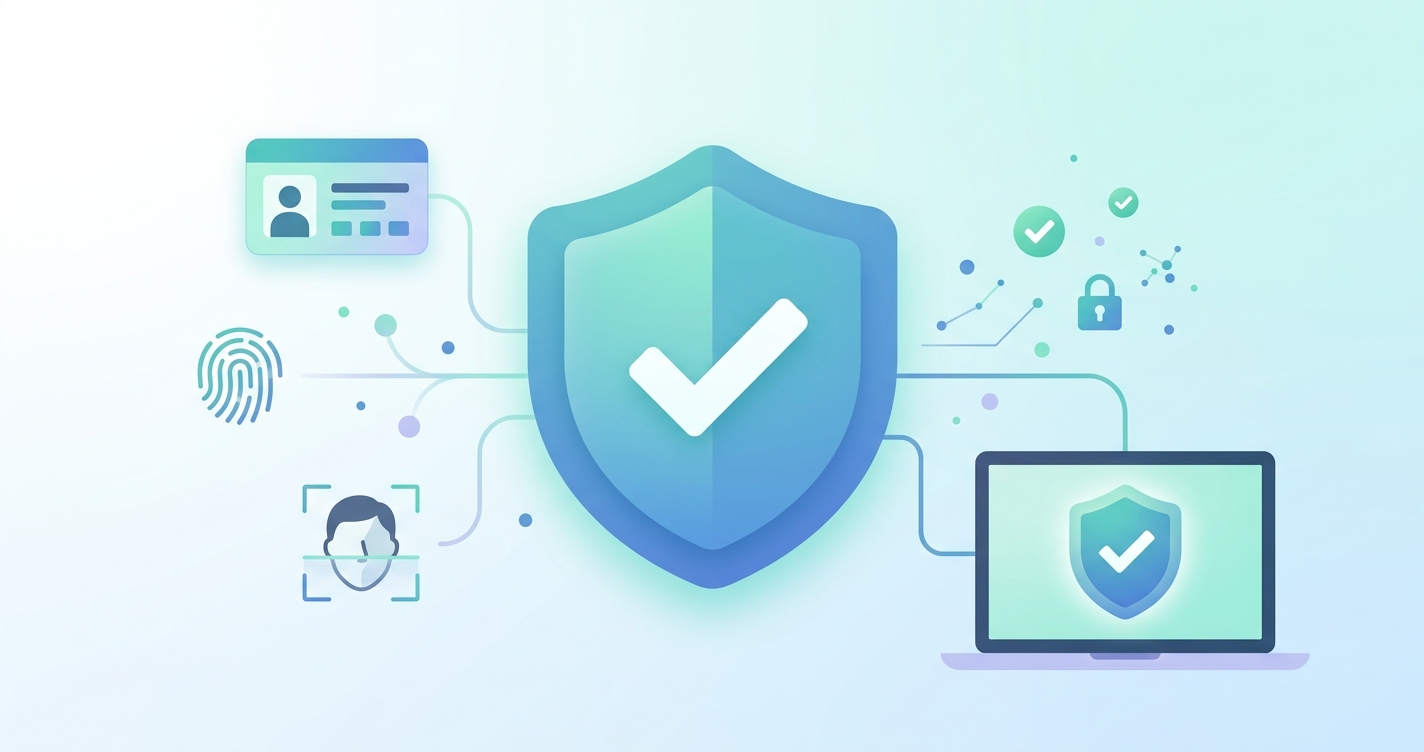
For organizations implementing remote identity proofing, the National Institute of Standards and Technology (NIST) Special Publication 800-63A provides the foundational framework. As digital transactions and remote interactions become the norm, establishing trust in a user's claimed identity is a critical security challenge. For CISO teams, identity platform providers, and government agencies, meeting the rigorous requirements of NIST SP 800-63A is not just a matter of compliance, but a fundamental component of risk management. The evolution of sophisticated presentation attacks, such as deepfakes and high-resolution masks, has made robust liveness detection a non-negotiable element of this process. Passive liveness detection, in particular, offers a path to meeting these standards without introducing unnecessary friction for users.
"For IAL2, the CSP shall verify that the applicant is a real person by detecting that the biometric sample is being captured from a live person and is not a presentation attack. This is known as presentation attack detection (PAD)." - NIST SP 800-63A, 2017
NIST 800-63A, IAL2, and Passive Liveness
NIST SP 800-63A defines three Identity Assurance Levels (IALs). IAL1 is the lowest level, with no requirement for identity proofing. IAL3 is the highest, requiring in-person proofing. For most online services, the relevant standard is IAL2, which permits remote identity proofing. A core requirement of IAL2 is the use of presentation attack detection (PAD) to ensure the biometric data captured is from a live person at the point of capture. This is where NIST 800-63A identity proofing passive liveness becomes a critical capability.
Passive liveness detection analyzes a user's video stream for subtle physiological cues that are invisible to the naked eye but indicate the presence of a live human. This method stands in contrast to active liveness, which requires the user to perform specific actions like blinking, smiling, or turning their head. These actions, while seemingly simple, add friction to the user experience and can be mimicked by sophisticated spoofing artifacts. Researchers at the University of California, Berkeley (M. H. Nguyen et al., 2019) demonstrated that many active liveness systems could be bypassed using 3D models and video projections. Passive systems, by focusing on involuntary biological signals, present a more formidable challenge for attackers.
To meet IAL2, an identity provider must verify a government-issued photo ID and then confirm that the person presenting the ID is the same person shown in the photo and is physically present. Passive liveness accomplishes this by analyzing the video feed during the facial capture process, confirming liveness before the facial comparison is even performed. This seamless, single-step process is crucial for creating low-friction user onboarding flows while adhering to the stringent security requirements of NIST.
| Feature | Active Liveness Detection | Passive Liveness Detection |
|---|---|---|
| User Action | Requires specific user actions (e.g., blink, smile, turn head) | No specific actions required; analyzes video stream |
| User Experience | Can be cumbersome, leading to higher drop-off rates | Frictionless and fast, improving conversion rates |
| Security | Vulnerable to presentation attacks that mimic user actions | More robust against advanced spoofing like masks and deepfakes |
| NIST Compliance | Can meet IAL2 requirements if PAD is sufficiently robust | Strongly aligns with IAL2 requirements for PAD |
| Implementation | Simpler to implement from a UX perspective, but complex PAD logic | Requires advanced computer vision and machine learning models |
Industry Applications
Financial Services
Financial institutions rely on robust identity verification for Know Your Customer (KYC) and Anti-Money Laundering (AML) compliance. The need to securely onboard customers remotely has driven the adoption of NIST 800-63A identity proofing passive liveness. Passive liveness allows banks and fintechs to meet regulatory demands without creating a frustrating onboarding experience that could lead potential customers to abandon the process. By integrating passive liveness, firms can reduce the risk of fraudulent account openings and ensure they are dealing with a real, live person.
Government Services
From state-level digital ID programs to federal benefits portals, government agencies are increasingly offering services online. Securing these services is a matter of national importance. The General Services Administration's (GSA) Login.gov is a prime example of a service that must adhere to NIST standards. Using passive liveness for remote identity proofing allows agencies to provide citizens with secure and equitable access to essential services, preventing identity theft and fraud.
Healthcare
Telehealth and digital health platforms handle sensitive patient data, making secure identity verification a top priority. To prevent medical fraud and ensure patient privacy, healthcare providers must be certain of a patient's identity before granting access to records or virtual consultations. Passive liveness provides a secure and user-friendly method for patient identity verification that complies with the Health Insurance Portability and Accountability Act (HIPAA) security rule and aligns with NIST guidelines.
Current research and evidence
The effectiveness of passive liveness detection is supported by a growing body of research. The ISO/IEC 30107 standard provides a framework for testing and evaluating PAD mechanisms. Conformance with this standard is a key indicator of a solution's effectiveness. A 2021 study by researchers at Michigan State University (J. Wen et al.) tested various PAD methods against a range of presentation attack instruments, finding that multi-channel analysis, such as combining color, texture, and motion analysis, was highly effective in detecting spoofs. This multi-modal approach is a hallmark of advanced passive liveness systems.
Furthermore, the FIDO Alliance, an industry consortium focused on authentication standards, has published extensive research on the importance of liveness detection in preventing large-scale biometric fraud. Their findings emphasize that passive methods, when implemented correctly, provide a higher level of security assurance than active methods, as they are less susceptible to replay attacks where an attacker uses a recorded video of a legitimate user.
The future of NIST 800-63a identity proofing passive liveness
The threat landscape for identity verification is constantly evolving, and so are the technologies used to combat fraud. The future of NIST 800-63A identity proofing passive liveness will likely involve even more sophisticated AI and machine learning models. These models will be trained on massive datasets of real and fraudulent sessions, allowing them to detect even the most subtle signs of a presentation attack. We can also expect to see greater integration of passive liveness with other biometric modalities, such as voice and behavioral biometrics, to create a multi-layered defense against identity fraud.
As deepfake technology becomes more accessible, the need for continuous innovation in passive liveness will only grow. The development of standards and best practices will continue to be a collaborative effort between government bodies like NIST, industry consortia like the FIDO Alliance, and the academic research community.
Frequently asked questions
Q: What is the difference between active and passive liveness detection? A: Active liveness detection requires users to perform an action, like blinking or turning their head, to prove they are live. Passive liveness detection analyzes a video feed for subtle biological indicators of life without requiring any specific user action, offering a more seamless and secure experience.
Q: Does NIST SP 800-63A mandate the use of passive liveness? A: NIST SP 800-63A does not mandate a specific technology. It requires that for Identity Assurance Level 2 (IAL2) remote identity proofing, the system must be able to detect presentation attacks. Passive liveness is widely considered one of the most effective methods for meeting this requirement.
Q: How does passive liveness detection work? A: Passive liveness systems use advanced computer vision and machine learning algorithms to analyze a video stream of a user's face. They look for subtle cues like micro-movements of the head and face, changes in skin texture and color, and even imperceptible physiological signals that indicate a live person is present.
Q: What is ISO/IEC 30107? A: ISO/IEC 30107 is an international standard that specifies requirements and methods for testing the performance of presentation attack detection (PAD) mechanisms. Compliance with this standard is a key benchmark for evaluating the effectiveness of a liveness detection solution.
As enterprises and government agencies navigate the complexities of remote identity verification, meeting the standards set by NIST is critical. The Circadify team is actively working in this space to provide robust, compliant, and user-friendly solutions for presentation attack detection. To learn more about how to integrate these capabilities, see our Integration guide.