
Liveness Detection API Integration: Developer Guide
Liveness detection API integration for developers: architecture choices, latency tradeoffs, standards, and the signals teams need before shipping remote identity proofing.
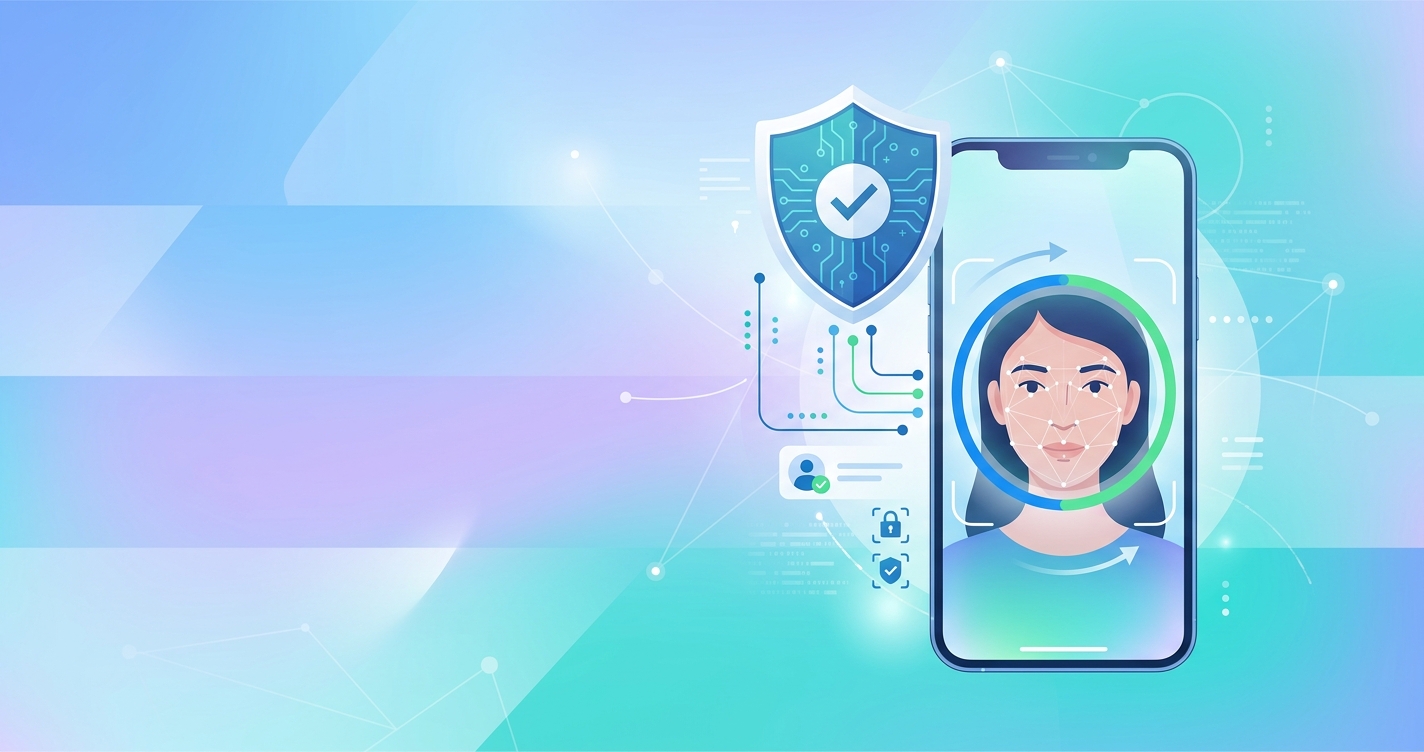
Liveness Detection API Integration: Developer Guide
Teams searching for liveness detection API integration developer guidance are usually past the marketing stage. They are trying to decide where liveness sits in the identity stack, what the API has to return, and what will break once real traffic shows up. That is the useful way to frame this topic. A liveness endpoint is not just another biometric feature. It is the control that decides whether the rest of the verification pipeline is looking at a real person or a replay, printout, or injected stream.
"Presentation attack detection is used to determine if a biometric sample was captured from a live bona fide user or from a presentation attack instrument." — NIST Face Analysis Technology Evaluation (FATE) PAD program
Liveness detection API integration developer priorities
A production liveness integration usually sits between capture and face matching. The client app gathers a selfie or short video, the liveness service scores the sample, and only then does the workflow move into identity comparison, sanctions checks, or account opening logic. If this stage is weak, everything downstream becomes easier to fool.
The European Banking Authority said in its remote onboarding guidelines that firms using biometric identification should take steps to confirm the user is physically present during capture. The Financial Action Task Force made a similar point in its digital identity guidance: remote identity systems need evidence that the claimed person is really there at the moment of verification. Those are policy statements, but for developers they translate into architecture.
The integration questions that matter early
- Is the product using passive liveness, active liveness, or both?
- Will inference run on-device, in the cloud, or in a hybrid flow?
- Does the API return only a pass/fail, or does it expose confidence, attack class, and retry guidance?
- Can the client bind liveness results to a document check or face match from the same session?
- What happens when the service sees poor lighting, dropped frames, or likely camera injection?
Where liveness belongs in the verification pipeline
Most teams settle on one of four patterns.
| Integration model | What the developer ships | Main advantage | Main drawback |
|---|---|---|---|
| Cloud API | Client uploads selfie or short clip to a hosted liveness endpoint | Fastest to integrate | Biometrics leave the device and network latency becomes part of UX |
| On-device SDK | Liveness runs inside the mobile app | Best privacy and low latency | Heavier mobile integration and model-update overhead |
| Hybrid risk model | Quick on-device check plus server-side review for risky sessions | Balances speed and control | More orchestration work |
| Step-up architecture | Passive liveness first, active challenge only for suspicious cases | Lower friction for most users | More state handling and edge-case logic |
The choice is rarely about pure model performance. It is usually about data residency, device coverage, and operational control. Regulated identity teams care about auditability just as much as spoof resistance.
What the API should return
A thin pass/fail response looks convenient, but it creates trouble later. Identity teams need more than a boolean if they want to tune retries, investigate fraud, or explain rejection patterns.
A better response object usually includes:
- A liveness verdict
- A numeric confidence score
- Capture quality signals such as blur, lighting, and face framing
- Attack hints such as likely screen replay, print artifact, or mask-like texture
- Session identifiers so the result can be bound to document verification and face matching
- Policy metadata showing which threshold version produced the decision
This is one reason standards work matters. ISO/IEC 30107 shaped the field's language around presentation attack detection, and NIST's PAD evaluations pushed vendors toward clearer reporting. Developers do not need to become biometric scientists, but they do need structured outputs that fit a fraud engine and an audit log.
The underlying signals are more varied than most API docs suggest
Passive liveness systems do not rely on a single trick. They look for artifacts that real faces produce and reproductions usually do not.
Boulkenafet, Komulainen, and Hadid at the University of Oulu helped make this clear with the OULU-NPU work in 2017, which became a reference benchmark for face anti-spoofing across different devices and capture conditions. More recent NIST evaluations kept pushing the same lesson: generalization matters. A model that looks good on one device or one attack set may not survive a broader deployment.
In practice, the API or SDK is often looking for a mix of signals:
- Texture differences between live skin and printed or displayed media
- Reflection and moire artifacts from screen replay attacks
- Geometric cues that suggest a real 3D face rather than a flat surface
- Frame-to-frame consistency that looks natural rather than composited
- Device and session signals that help detect virtual cameras or tampered capture paths
That last point gets overlooked. Pure image analysis is important, but many integration failures come from treating liveness as an isolated classifier instead of a session-level security control.
API design tradeoffs developers run into
Latency vs. coverage
A hosted API may let the team update models centrally and keep attack intelligence in one place. The downside is round-trip delay and more privacy review. An on-device path feels cleaner to the user, but weaker phones and inconsistent mobile camera pipelines can narrow the safety margin.
Friction vs. assurance
Passive liveness wins on user experience because it does not ask the person to blink, turn, or read prompts. Active liveness can add coverage in some attack scenarios but costs conversion. That is why many teams now use passive by default and reserve step-up checks for suspicious sessions.
Simplicity vs. observability
A single endpoint looks elegant in the first sprint. Six months later, fraud ops wants reason codes, product wants retry analytics, legal wants retention controls, and enterprise customers want proof that the same capture session produced every downstream decision. Observability nearly always becomes a feature request after launch.
Industry applications
Banking and fintech onboarding
Financial onboarding teams use liveness to strengthen remote KYC flows without sending every applicant to manual review. The FATF's digital identity guidance and the EBA's onboarding guidance both pushed this use case toward stronger presence checks.
Government and regulated identity proofing
Government programs care about audit trails, accessibility, and evidence binding. Here the integration work is often less about slick UX and more about making sure each session artifact can stand up to external review.
Workforce and enterprise access
Enterprises using remote identity proofing for contractor enrollment or privileged access care about device trust and session integrity. Liveness is valuable, but it usually has to be paired with device attestation and workflow logging.
Current research and evidence
Research in this field has gradually moved away from the basic question of whether spoofing can be detected and toward the harder question of how well systems generalize. Zinelabidine Boulkenafet, Jukka Komulainen, and Abdenour Hadid's OULU-NPU benchmark gave developers and researchers a harder mobile-first test bed for anti-spoofing. NIST's FATE PAD program added independent evaluation pressure, which matters because vendor metrics are often difficult to compare on their own.
Policy and standards bodies also shaped implementation choices. The Financial Action Task Force's digital identity guidance treated liveness and real-person presence as core parts of trustworthy remote identity systems. The European Banking Authority's remote onboarding guidelines did the same for regulated financial flows. Together, those sources nudged liveness from a nice-to-have fraud tool into a baseline architectural requirement.
For developers, the practical takeaway is simple: integration quality is not only about model selection. It is about capture controls, response design, device trust, fallback logic, and measurable behavior across many devices.
The future of liveness detection API integration
The next wave will probably be less about one bigger model and more about tighter session binding. Expect APIs that connect liveness, document authenticity, face match, and device integrity into one evidence package. Expect more hybrid deployments too. Client-side checks can keep onboarding fast, while server-side review handles higher-risk edge cases.
I also expect procurement teams to ask harder questions about test coverage. Independent evaluation, cross-device behavior, and attack-class reporting are becoming procurement requirements, not optional extras. Developers integrating these APIs will feel that shift first.
Frequently asked questions
Should a liveness API return a simple pass or fail?
Usually no. A pass/fail can work for prototypes, but production teams usually need confidence scores, quality indicators, and policy versioning so fraud operations and compliance teams can understand what happened.
Is passive liveness enough for most onboarding flows?
For many consumer onboarding flows, passive liveness is the default because it keeps friction low. Higher-risk cases often add step-up checks, device attestation, or manual review rather than forcing every user through active challenges.
Where should liveness run: device or cloud?
It depends on privacy, latency, and control requirements. On-device flows reduce data movement and feel faster. Cloud APIs are easier to update centrally and can fit organizations that want tighter server-side control.
What is the biggest integration mistake teams make?
Treating liveness as a black-box score. The better approach is to bind the verdict to session metadata, quality signals, and downstream identity decisions so the system can be audited and improved.
Teams comparing architecture options often start with Passive Liveness Detection, Explained and Presentation Attack Detection Standards: ISO 30107 Explained. If you are mapping a production path for remote identity proofing, Circadify's fraud-detection work is aimed at that integration layer: Integration guide → circadify.com/solutions/fraud-detection.