
Why do some apps ask me to look at the camera for a few seconds?
Why do apps ask for face scan? A research-style look at passive liveness detection, the brief camera step, and how identity platforms can explain it to users.
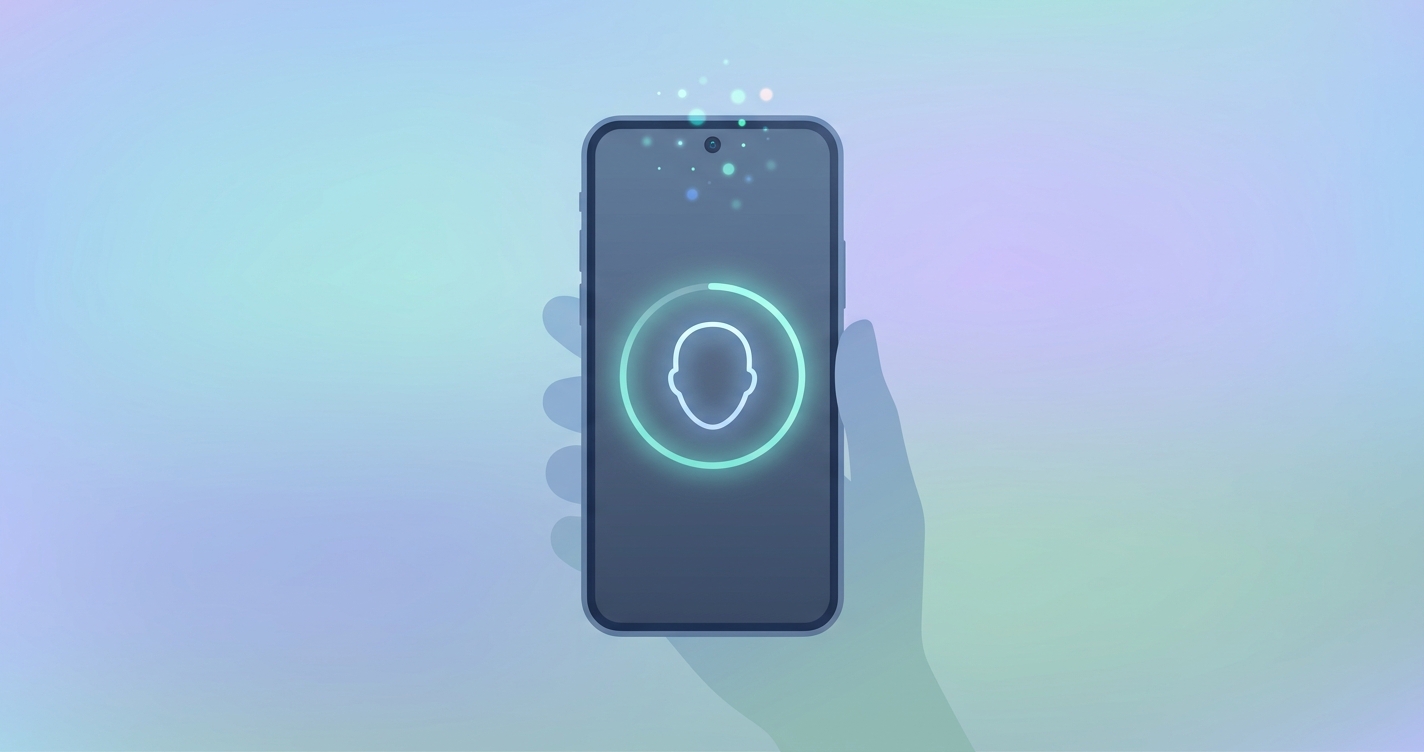
Opening an account, claiming a benefit, or unlocking a high-value transaction increasingly ends with the same small request: hold the phone steady and look at the camera for a moment. To the person on the other side, that pause feels like nothing happened. Behind it, an entire category of fraud defense ran in the background. For identity platform providers fielding the question of why do apps ask for face scan, the honest answer is that those few seconds are doing the heaviest security work in the whole onboarding flow, and most users never know it.
Deepfake-related identity attacks were observed roughly every five minutes globally in 2024, and deepfakes accounted for an estimated 40% of all biometric fraud attempts that year, according to industry fraud reporting aggregated across providers including Entrust and Pindrop.
Why do apps ask for face scan, and what is actually happening
When an app asks you to look at the camera, it is not simply taking a photograph to match against an ID. It is running presentation attack detection, the discipline of confirming that a real, living person is physically present in front of the lens rather than a printed photo, a replayed video, a 3D mask, or a synthetically generated face. The branch of this that requires no instructions from the user is called passive liveness detection.
The distinction matters. Older verification flows asked people to perform an action: blink, smile, turn your head, or read a number aloud. These are forms of active liveness, and they create friction and confusion. Passive liveness analyzes signals the user produces naturally during a brief capture, such as facial micro-texture, depth cues, light reflection on skin, and subtle color changes tied to blood flow beneath the surface. The user just looks. The system decides.
That is why the interaction is short and silent. The few seconds are a sampling window. The camera captures enough frames for an algorithm to evaluate whether the optical evidence is consistent with a genuine three-dimensional human face under real ambient light, as opposed to a flat screen or a high-resolution mask.
Active versus passive liveness: what the camera step is doing
The table below frames the difference identity teams most often need to explain to end users and to procurement stakeholders.
| Dimension | Active liveness | Passive liveness detection |
|---|---|---|
| User action required | Blink, turn, smile, or read a prompt | None beyond holding still and looking |
| Typical duration | Several seconds plus instruction reading | A brief, near-instant capture |
| Failure mode for users | Confusion, retries, abandonment | Largely invisible to the user |
| Spoof signals analyzed | Motion in response to a prompt | Texture, depth, light, skin-level color cues |
| Accessibility | Harder for some users to complete | Lower cognitive and physical demand |
| Reported task completion | Around 92% in comparative testing | Around 99% in comparative testing |
The completion figures reflect comparative usability findings cited across passive liveness vendor and standards literature, where passive approaches reported roughly 99.2% task completion against about 92.1% for active methods. The gap is the business case in a single number: every prompt you remove is a user you keep.
Key reasons the brief camera step exists at all:
- It confirms a live human is present, not a static image or replayed clip.
- It defends against deepfakes and synthetic faces injected into the capture.
- It satisfies regulatory expectations for remote identity proofing.
- It reduces account takeover and synthetic identity fraud at the point of entry.
- It does all of this without asking the user to understand or perform anything.
Industry applications of the silent camera check
Financial services and eKYC
Banks and fintech platforms run electronic Know Your Customer (eKYC) checks at account opening and at high-risk transaction points. The camera step pairs a face capture with a document scan, then confirms the person holding the document is live and matches it. The cryptocurrency sector was the single most targeted industry for deepfake fraud in 2024, which explains why exchanges lean heavily on passive liveness at onboarding.
Government ID verification technology
Public-sector portals for benefits, tax, licensing, and credential renewal carry high assurance requirements. Here the brief camera interaction supports remote identity proofing at scale, letting agencies serve citizens without an in-person visit while meeting documented identity-proofing controls.
Telehealth, gaming, and regulated access
Healthcare platforms verify patients before issuing prescriptions or releasing records. Gaming and age-restricted services confirm a real, eligible person rather than a shared or fabricated identity. In each case, the design goal is the same: maximum assurance, minimum instruction.
Current research and evidence
The standard that governs this work is ISO/IEC 30107-3, whose current edition was published in 2023 and defines how presentation attack detection is tested, measured, and reported. Accredited laboratories such as iBeta Quality Assurance evaluate systems against it at Level 1 and Level 2, with higher-tier testing expanding to address more sophisticated attacks. In 2024 the number of providers confirmed compliant with the ISO/IEC 30107 series reached a record high, with dozens of confirmation letters published, a signal that passive liveness has matured from novelty to baseline expectation.
The research community is keeping pace with the threat. The 2024 International Joint Conference on Biometrics (IJCB 2024) hosted a dedicated competition on presentation attack detection for ID cards, benchmarking current algorithms against emerging spoof techniques. NIST continues to publish updates on the ISO/IEC 30107 series, anchoring testing methodology for buyers who need defensible evidence rather than marketing claims.
The urgency comes from the attack side. Reporting compiled across the fraud-prevention industry describes deepfake fraud attempts surging by orders of magnitude between 2023 and 2025, with the volume of deepfake files projected to climb from roughly 500,000 in 2023 toward 8 million by 2025. Human reviewers are not a backstop: studies cited in 2024 and 2025 fraud reporting put human detection of high-quality deepfake video at around 24.5%. People simply cannot see what the algorithm is built to catch, which is precisely why the silent camera step replaces human judgment at the moment of truth.
The future of the brief camera interaction
Three shifts are likely to define the next phase.
- Injection attack detection moves to the center. As fraudsters bypass the physical camera and feed synthetic video directly into the capture pipeline, defenses are extending from what the lens sees to how the signal arrives. The brief look at the camera will increasingly be paired with checks on the integrity of the capture channel itself.
- Passive becomes the default user experience. With completion rates measurably higher than active methods, the prompt-driven blink-and-turn flow is being phased out in favor of interactions the user barely registers.
- Transparency becomes a product requirement. Regulators and privacy-conscious users want to know what the camera did and what was kept. Identity providers that can explain the few seconds in plain language, and show that biometric signals were used for liveness and not silently retained, will hold a trust advantage.
The throughline is that the interaction gets shorter and quieter even as the security underneath gets stronger. For identity platform providers, the communication challenge is to reassure users that less to do does not mean less protection. It means the protection moved into the software.
Frequently asked questions
Why do apps ask for a face scan instead of just a password? Passwords confirm a secret someone knows, which can be stolen, phished, or sold. A passive liveness face check confirms a real, present human, which addresses account takeover and synthetic identity fraud that passwords cannot. The brief camera step verifies presence, not just knowledge.
Do I need to blink or move my head during the scan? With passive liveness detection, no. The system analyzes natural signals such as facial texture, depth, and light during a short capture, so you only need to hold still and look. If an app asks you to blink or turn, it is using an older active liveness approach.
Is the brief camera capture storing my face? That depends on the provider and the regulations it follows. The liveness decision itself is about confirming a live person at that moment. Responsible identity platforms separate the liveness check from any long-term storage and disclose retention practices, which is increasingly a compliance expectation.
Can a photo or video pass the face scan? That is exactly what presentation attack detection is built to stop. A flat photo lacks the depth and skin-level optical cues of a real face, and replayed or deepfake video is targeted by liveness and injection-attack defenses tested under standards such as ISO/IEC 30107-3.
The market is moving fast, and the gap between a friction-heavy prompt flow and a silent, high-assurance capture is now a competitive line. Circadify is working in exactly this space, building passive liveness that verifies a real human without asking anyone to blink or turn. Identity platform teams looking to explain and deploy this capability can start with our integration guide for fraud detection.