Will my online doctor know it's really me if I'm sick in bed?
How passive biometric liveness powers telehealth identity verification for unwell patients, and what it means for healthcare ID and government verification providers.
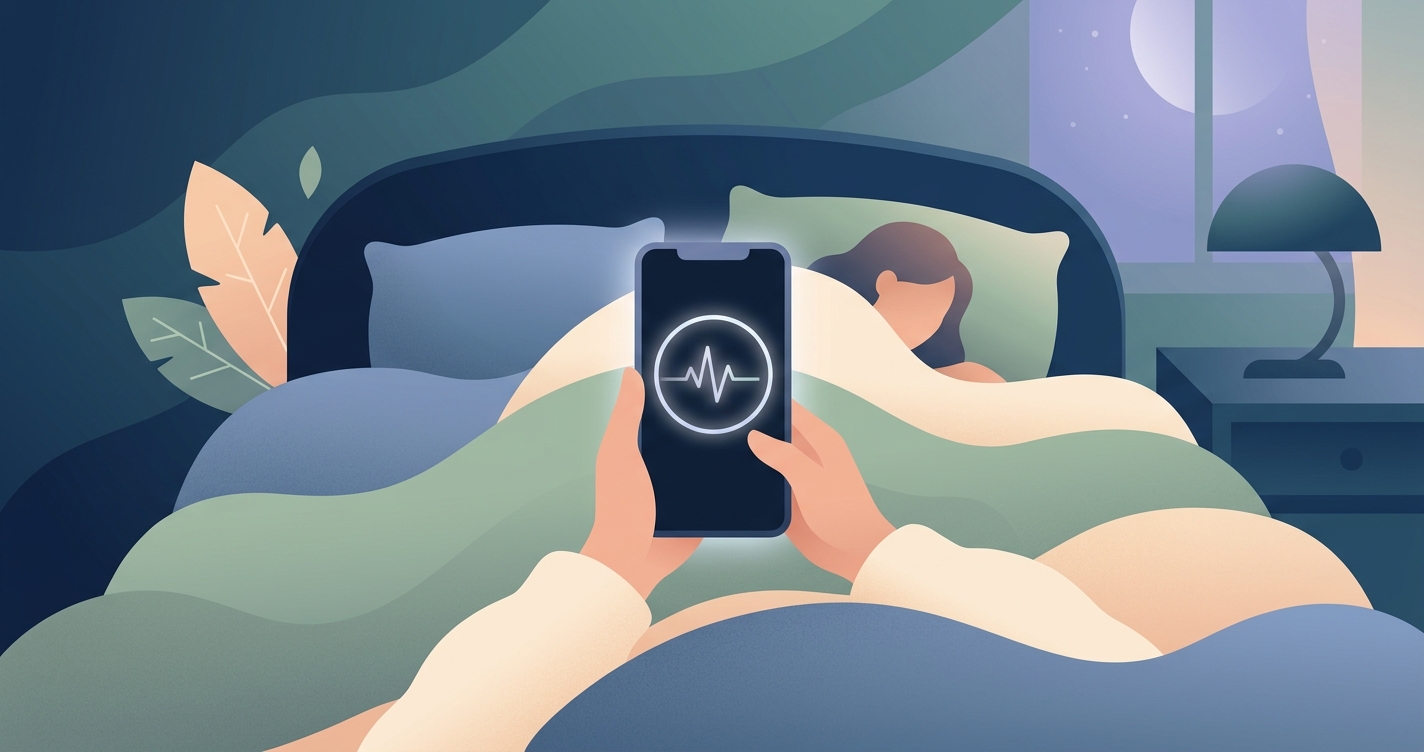
Picture the moment a virtual visit begins. You are propped against two pillows, voice hoarse, eyes half open, phone balanced on your chest. The clinician on the other end has prescribing authority, access to your records, and a legal duty to confirm you are who you claim to be. The quiet anxiety underneath that scenario is a real engineering problem: telehealth identity verification has to work for a sick person who cannot follow instructions, hold a pose, or repeat a head movement on command. For the platforms building remote healthcare infrastructure, the question is not whether to verify the patient, but how to do it without turning a vulnerable moment into a usability failure.
An HHS Office of Inspector General review of early-pandemic claims flagged 1,714 high-risk providers tied to roughly $127.7 million in potentially fraudulent Medicare telehealth billing, a signal that remote care channels demand identity assurance built for scale. , U.S. Department of Health and Human Services, Office of Inspector General, 2022
Why telehealth identity verification breaks for the unwell patient
Most legacy verification flows assume a cooperative, alert user. They ask the person to blink, smile, turn their head left and right, or read a sequence of numbers aloud. These are forms of active liveness detection, and they exist to prove that a live human is present rather than a printed photo, a replayed video, or a synthetic deepfake. The trouble is that the population using telehealth skews toward people who are fatigued, febrile, post-operative, elderly, cognitively impaired, or simply too unwell to choreograph a verification dance. The exact moment a patient most needs frictionless access is the moment active challenges fail.
Passive liveness flips the model. Instead of asking the patient to perform, the system analyzes a brief, ordinary camera capture for the physical signatures of a real, living person. There is no instruction to follow. A patient lying still in dim light, saying nothing, can be verified in the same second they appear on screen. For identity platform providers serving healthcare, that distinction is the difference between an inclusive flow and one that quietly excludes the sickest users.
The signals that make this possible are subtle. Remote photoplethysmography, or rPPG, reads micro-fluctuations in skin color caused by blood flowing beneath the surface with each heartbeat. Texture analysis separates living skin from a screen or a mask. Depth and reflectance cues distinguish a three-dimensional face from a flat replay. None of these require the patient to do anything but be present.
Active versus passive liveness in a healthcare context
The choice between active and passive approaches is not academic for telehealth builders. It shapes completion rates, accessibility compliance, and exposure to presentation attacks. The table below compares the two on the dimensions that matter when the user is sick.
| Dimension | Active liveness | Passive liveness |
|---|---|---|
| Patient effort | Blink, turn, smile, or speak on command | None beyond facing the camera |
| Works for fatigued or impaired patients | Often fails or frustrates | Designed for stillness |
| Time to verify | Several seconds, multiple steps | Sub-second, single capture |
| Accessibility for disabled users | Challenge instructions can exclude | No motor or cognitive demand |
| Deepfake and replay resistance | Vulnerable to scripted injection attacks | rPPG and texture cues resist synthetic media |
| Drop-off risk in onboarding | Higher | Lower |
| Patient awareness of friction | High | Minimal |
For a remote care platform, the operational consequences cluster around a few clear advantages of the passive approach:
- Fewer abandoned visits, because the sickest patients are not asked to perform.
- Broader accessibility, since blink or motion challenges can disadvantage patients with neuromuscular or cognitive conditions.
- Faster sessions, freeing clinician time that would otherwise be lost to retries.
- Consistent assurance across device quality, lighting, and patient alertness.
Industry applications across remote healthcare
Telehealth identity verification is not a single use case. It threads through the patient journey at several high-stakes points, each with its own risk profile.
Controlled substance prescribing
Remote prescribing of controlled medications is among the most scrutinized telehealth activities, with drug diversion a recurring fraud pattern. Confirming that the live patient matches the credentialed identity, before any prescription is issued, is a direct control against diversion schemes that rely on borrowed or fabricated identities.
Patient onboarding and record matching
Misidentification at intake can merge or split medical records, with downstream clinical safety risks. Binding a verified government ID to a live biometric capture at first contact reduces duplicate records and the chance that one patient's history is attached to another.
Insurance and benefits eligibility
Medical identity theft lets bad actors consume care, drugs, and benefits under someone else's coverage. A passive liveness check at the point of service raises the cost of impersonation without adding friction for legitimate members.
Government and public health programs
State Medicaid portals, veterans' health systems, and public benefit platforms increasingly require remote identity proofing aligned with federal assurance levels. Government ID verification technology that pairs document authentication with passive liveness gives these programs a path to high assurance that still serves elderly and disabled constituents.
Current research and evidence
The standards environment is moving decisively toward mandatory liveness. The National Institute of Standards and Technology, in its draft revision of the Digital Identity Guidelines (SP 800-63-4), makes presentation attack detection a requirement rather than a recommendation for remote identity proofing at Identity Assurance Level 2, and explicitly calls for analyzing media for signatures of AI-generated content and deepfakes. Earlier versions of SP 800-63A only strongly encouraged liveness; the updated guidance, opened for public comment through 2024, reflects how quickly synthetic media has changed the threat model.
Presentation attack detection itself is governed by ISO/IEC 30107-3, the international standard that defines how PAD systems are tested against artefacts such as printed photos, video replays, and masks. Independent evaluation against that standard is the credible basis on which healthcare buyers can compare claims, rather than relying on vendor assertions.
The fraud economics reinforce the urgency. Industry analysis cited across healthcare security reporting projects generative-AI-enabled fraud losses in the United States could reach roughly $40 billion by 2027, a trajectory that makes static, knowledge-based identity checks increasingly inadequate. Meanwhile, the HHS OIG findings on high-risk telehealth billing show that the abuse surface is already concrete and quantified, not hypothetical.
On the science of passive signals, remote photoplethysmography has matured from a laboratory curiosity into a deployable liveness cue. Because rPPG depends on a genuine cardiac pulse perfusing real tissue, it is structurally difficult for a replayed video or a rendered deepfake to reproduce faithfully, which is precisely why it complements texture and depth analysis in a layered defense.
The future of telehealth identity verification
Three shifts are likely to define the next phase. First, regulatory convergence will make presentation attack detection a baseline expectation across telehealth, not a differentiator, as NIST guidance and state-level telemedicine identity rules harden. Second, the deepfake arms race will push verification away from anything a patient must perform, since scripted challenges can be anticipated and injected, while involuntary biological signals are far harder to fake on demand. Third, identity will become continuous rather than a one-time gate, with passive re-verification woven quietly through longer clinical sessions to confirm the same person remains present.
For identity platform providers and government verification programs, the design north star is constant: assurance that scales up as fraud evolves, and friction that scales down to meet the patient where they are, even flat on their back at home. The platforms that win in healthcare will be the ones that treat the sick, tired, and impaired patient as the design center rather than the edge case.
Frequently asked questions
Can my online doctor verify me if I am too sick to follow instructions? Yes, when the platform uses passive liveness. These systems confirm a live human from an ordinary camera capture by reading signals like blood-flow-driven color changes and skin texture, so a patient lying still and silent can still be verified without blinking, turning, or speaking on command.
How does passive liveness tell a real patient from a deepfake? It looks for physical evidence of a living person in three dimensions, including remote photoplethysmography signals tied to a genuine heartbeat, micro-texture of real skin, and depth cues. Replayed videos and synthetic faces struggle to reproduce these involuntary signals consistently.
Is passive liveness compliant with healthcare identity standards? Passive presentation attack detection aligns with the direction of NIST SP 800-63-4, which moves toward mandatory PAD for remote identity proofing at IAL2, and can be evaluated against ISO/IEC 30107-3. Buyers should request independent test results against that standard.
Does adding liveness slow down the patient visit? Passive checks typically resolve in under a second from a single capture, which is faster than multi-step active challenges and reduces abandoned visits, particularly among elderly and unwell patients.
Circadify is building toward this exact problem space: passive biometric liveness that verifies a real human without asking a sick patient to blink, pose, or perform. Teams designing healthcare and government identity flows can review the technical approach in the integration guide to see how presentation attack detection fits a remote proofing pipeline.