
Signs Your Face Scan Is Being Spoofed by Fraudsters
Discover the critical face scan spoofing signs that enterprise fraud teams use to detect presentation attacks, deepfakes, and identity verification fraud.
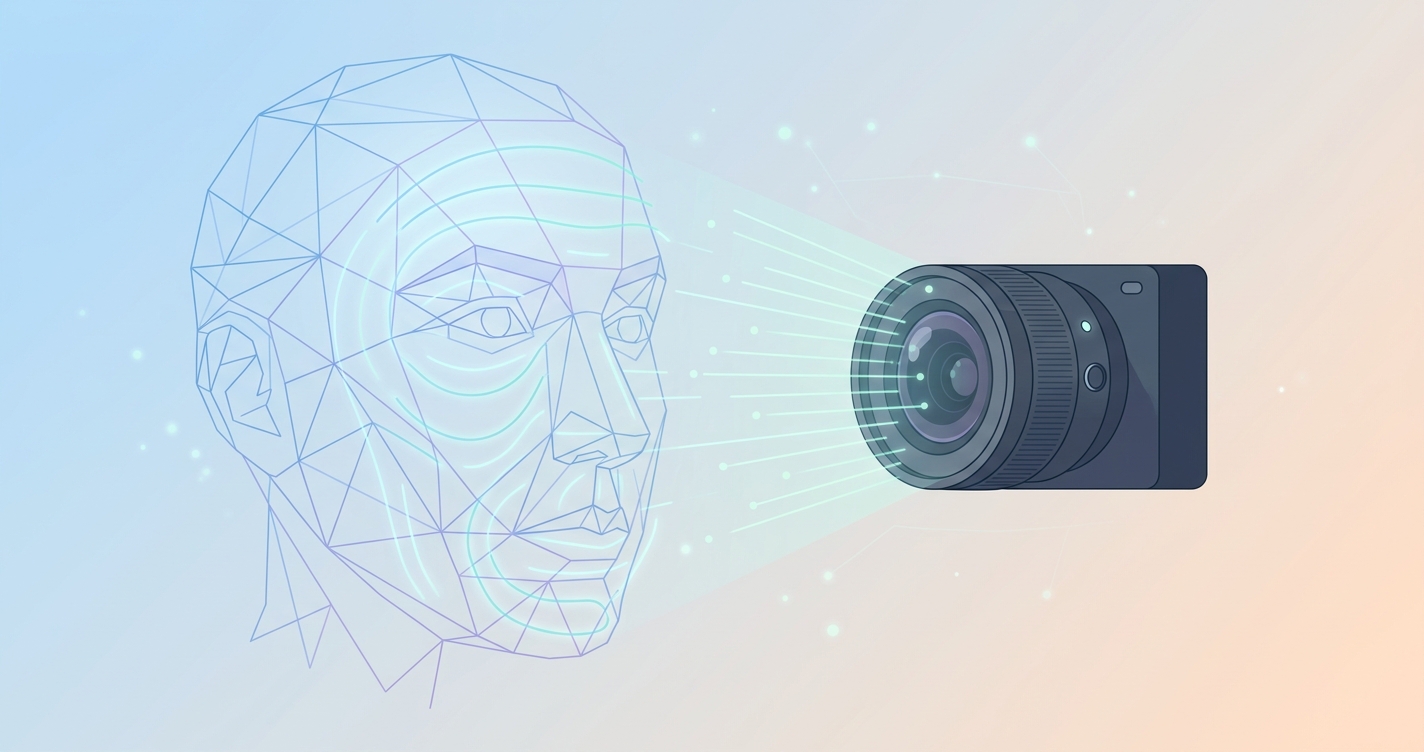
When enterprise fraud teams review failed onboarding sessions, the objective is no longer simply matching a face to an ID document. The primary challenge is determining if the face in front of the camera is a living, breathing human being. Spotting the subtle face scan spoofing signs has become a highly technical arms race in the modern security environment. As synthetic identity creation tools become cheaper and presentation attacks grow more sophisticated, identity platforms and corporate security teams can no longer rely on manual human review. Instead, they require automated presentation attack detection systems capable of isolating microscopic anomalies in milliseconds.
The barrier to entry for identity fraud has plummeted over the last few years. Previously, acquiring a highly realistic 3D mask required significant capital and specialized manufacturing capabilities. Today, generative artificial intelligence allows attackers to produce highly convincing synthetic media at a fraction of the cost. This shift forces organizations to look beyond the surface image and evaluate the physical reality of the user presenting the credential.
"In 2024, deepfakes and advanced digital injection methods represented up to 40% of all video biometric fraud attempts, fundamentally shifting the focus of identity platforms from static matching to dynamic liveness detection."
- Threat Intelligence Reports, FluxForce AI, 2024
Deconstructing face scan spoofing signs
Fraudsters utilize a spectrum of attack vectors to bypass remote identity proofing. These methods, formally known as presentation attacks, range from rudimentary printed photos to highly realistic 3D masks and AI generated deepfakes. Recognizing the core face scan spoofing signs requires an understanding of what authentic biological presence looks like to a camera sensor.
The International Organization for Standardization provides a rigorous framework for evaluating these systems through the ISO/IEC 30107-3 standard, which categorizes presentation attacks into three distinct levels of sophistication. Level 1 attacks involve easily accessible instruments like printed paper or static images on a mobile screen. Level 2 attacks require moderate skill and resources, such as high resolution video replays or simple paper masks. Level 3 attacks represent the most advanced threats, including custom fabricated silicone masks, theatrical prosthetics, and hyper realistic deepfakes. Recognizing face scan spoofing signs at Level 3 requires an architecture capable of analyzing biological signals that cannot be manufactured.
| Authentication Metric | Genuine User Signal | Common Spoofing Indicator |
|---|---|---|
| Illumination | Natural light absorption and sub-surface scattering | Specular glare on glossy prints or digital screens |
| Depth Mapping | Accurate 3D contours across facial features | Flat geometry or warped depth mapping on paper cuts |
| Sensor Interaction | Clean image capture matching environment lighting | Moire patterns and refresh rate flickering from screens |
| Biological Rhythms | Micro-color changes from cardiac pulse | Completely static pigmentation with no physiological pulse |
Understanding these categories allows security teams to identify the primary red flags of an attack:
- Unnatural lighting gradients that do not match the background environment.
- Visible screen bezels or the edges of a physical mask near the neck and jawline.
- Absence of involuntary micro-expressions, such as natural eye saccades or subtle muscle twitches.
- Asynchronous audio and visual lip movements in active video challenges.
- Algorithmic blurring around the edges of hair or accessories in deepfake attempts.
- Moire interference patterns caused by filming a secondary digital screen.
Balancing security with user experience
For identity platform providers, recognizing face scan spoofing signs is only half the operational equation. The other half involves ensuring that genuine users are not mistakenly blocked by hyper sensitive security protocols. Fraud teams constantly monitor two critical metrics: the False Acceptance Rate and the False Rejection Rate.
If a presentation attack detection model is tuned too aggressively, it may flag poor lighting conditions or older camera hardware as a spoofing attempt, leading to a high False Rejection Rate. This creates unnecessary friction, forcing legitimate customers into manual review queues or causing them to abandon the onboarding process entirely. Conversely, if the system is too lenient, it risks a high False Acceptance Rate, allowing synthetic identities to bypass the security perimeter. Passive liveness detection resolves this tension by silently analyzing the physiological properties of the face without requiring the user to navigate complex challenges.
Industry applications of presentation attack detection
Identity verification technology must adapt to the specific risk profiles of different sectors. The methods used to detect face scan spoofing signs vary depending on the assurance level required by the relying party.
High assurance financial onboarding
Security teams in the banking sector deploy rigorous electronic Know Your Customer checks to prevent account takeover and synthetic identity fraud. By recognizing early spoofing indicators, financial institutions can block bad actors before they enter the system, protecting both retail and institutional assets. In highly regulated markets, passive liveness detection serves as the first line of defense against scalable fraud rings.
Government ID verification
Public sector agencies face a unique challenge in that they must provide accessible services while maintaining strict security standards. Modern government ID verification technology relies on presentation attack detection to ensure citizens can remotely access tax portals and benefits without falling victim to impersonation attacks. Systems must verify biological presence without requiring complex instructions that could alienate users with older devices or physical disabilities.
Enterprise access and zero trust security
As corporate perimeters dissolve due to remote work architectures, identity becomes the new security boundary. Identity platform providers integrate biometric liveness to secure remote workforce access. This ensures that a compromised credential or a stolen password cannot be weaponized if the attacker cannot physically present the authorized user's face to the authentication terminal.
Current research and evidence
The academic and institutional focus on presentation attack detection has intensified in response to the proliferation of synthetic media. The US National Institute of Standards and Technology conducts extensive evaluations of software based presentation attack detection algorithms, noting the wide variability in detection accuracy across different attack instruments.
In 2024, the LivDet-Face competition served as a crucial benchmark for the biometrics industry. Researchers evaluating hundreds of submission models concluded that single modality detection is no longer sufficient to stop advanced attacks. Systems that rely solely on 2D texture analysis are highly vulnerable to high definition video replays and digital injection attacks.
To counter these threats, researchers are advancing passive techniques based on remote photoplethysmography. Every time a human heart beats, it pushes a micro pulse of blood through the capillary network beneath the skin. This subtle change in blood volume causes a microscopic shift in the way the skin absorbs and reflects ambient light. While this shift is completely invisible to the naked human eye, a standard smartphone camera can detect it. By isolating this signal, a passive liveness system confirms biological presence. A photograph, a silicone mask, or a high definition display monitor does not have a pulse. Consequently, the complete absence of a photoplethysmographic signal is one of the most definitive face scan spoofing signs available to modern fraud detection engines.
The future of face scan security
The trajectory of identity verification points toward continuous and entirely passive authentication. As generative artificial intelligence enables the rapid creation of highly convincing synthetic identities, static image analysis will become obsolete. The future of fraud prevention relies on systems that can instantaneously process multidimensional biometric data, including depth, micro-texture, and biological rhythms.
Fraud teams will increasingly rely on layered security models where presentation attack detection operates silently in the background. By moving away from active, instruction based liveness checks, organizations can reduce friction for genuine users while maintaining a fortified defense against automated and scalable fraud vectors. The integration of zero trust principles with continuous biometric liveness will ensure that trust is never implicitly granted, even after the initial onboarding session is complete.
Frequently asked questions
What is the difference between a presentation attack and a digital injection attack?
A presentation attack involves placing a physical or digital artifact, such as a printed photo or a tablet playing a video, in front of the camera sensor. A digital injection attack bypasses the camera hardware entirely, feeding a synthetic video stream directly into the software application or operating system.
How do passive liveness systems detect spoofing attempts?
Passive liveness systems analyze signals that do not require user interaction. These systems evaluate biological indicators like micro movements, skin reflectance, and sub surface blood flow to verify physical presence without asking the user to blink or turn their head.
Why are active liveness challenges becoming less secure?
Active liveness challenges, which ask users to perform specific movements, introduce friction and can be reverse engineered by fraudsters. Attackers can use real time deepfake software to map synthetic faces onto actors who perform the requested movements, successfully defeating the active checks.
What are the most difficult spoofing attacks to detect?
Highly realistic 3D silicone masks and sophisticated deepfakes injected directly into the camera stream are currently the most challenging spoofing attempts. Detecting these requires advanced, multi modal systems that evaluate depth, texture, and physiological liveness simultaneously.
When evaluating how to identify face scan spoofing signs, CISO teams and identity platform providers need technology that definitively separates human life from synthetic artifacts. Circadify is addressing this space by developing passive liveness and presentation attack detection systems that verify physical presence without adding friction to the user experience. To explore how our architecture can secure your remote onboarding workflows, read our Integration guide.