
Can I verify my identity securely from my phone, even without perfect lighting?
How secure identity verification on a phone stays reliable in dim, mixed, or harsh lighting, and what CISO teams should expect from passive liveness systems.
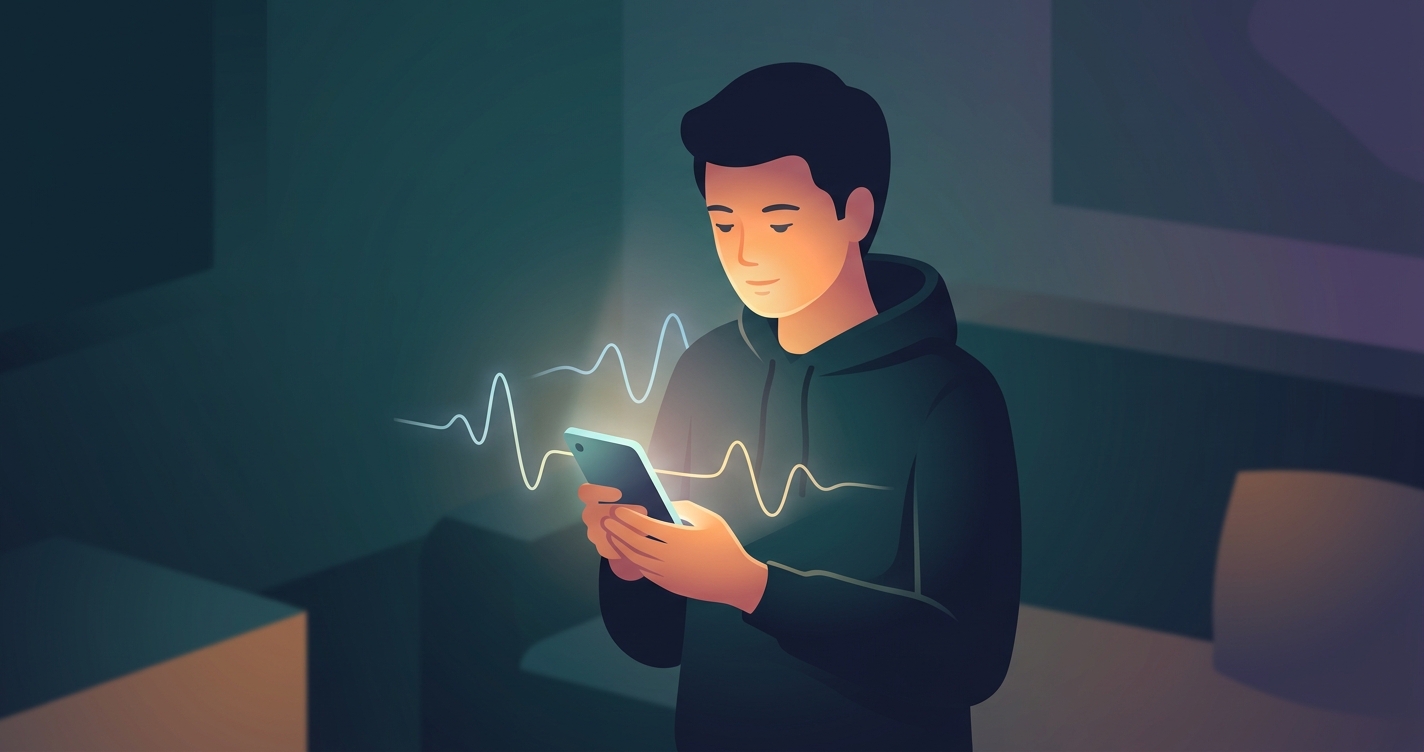
The most common place a person verifies their identity today is not a branch office or a government counter. It is a phone held at arm's length, often in a parked car, a hallway, a late-night kitchen, or a train carriage where overhead light flickers and a window throws glare across the screen. For the security teams designing these flows, the question of whether someone can complete secure identity verification on a phone without ideal lighting is not a usability footnote. It is a direct driver of fraud exposure, abandonment rates, and equitable access. A system that only works under studio conditions quietly pushes legitimate users toward weaker fallback channels, which is exactly where attackers prefer to operate.
NIST has measured demographic effects in face recognition since its 2019 Face Recognition Vendor Test, and its findings show that image quality factors such as illumination can change error rates by an order of magnitude across groups, making lighting robustness a fairness and security issue at the same time.
What secure identity verification on a phone actually requires
A modern verification flow does more than match a face to a document photo. It has to confirm that a real, living human is present at the moment of capture, that the captured image is genuine rather than a replay or injection, and that the decision holds up across the messy range of conditions consumers create. Secure identity verification on a phone depends on three layers working together: capture quality, liveness assurance, and matching. Lighting stresses all three, but it stresses liveness most, because many older liveness techniques were tuned for a cooperative subject in even, frontal light.
This is where the distinction between active and passive approaches matters. Active liveness asks the user to blink, smile, turn their head, or follow a moving dot. Passive liveness analyzes a single short capture without instructions, looking at signals such as skin texture, micro-reflection, optical depth cues, and in some systems remote photoplethysmography (rPPG), the faint color change in skin as blood pulses beneath it. Passive methods reduce the cognitive load on the user, which matters more, not less, when conditions are poor and a person is already struggling to position their face.
| Factor | Active liveness in low light | Passive liveness in low light |
|---|---|---|
| User instructions | Blink, turn, or track a prompt the user may not see clearly | None; a brief steady look at the camera |
| Sensitivity to dim light | High; gestures get missed or misread | Moderate; depends on signal modeling, not motion |
| Demographic fairness risk | Elevated when prompts depend on visible feedback | Lower when models are trained on diverse illumination |
| Attack surface | Vulnerable to recorded gesture replay | Resists static spoofs; tuned for replay and injection |
| Typical completion time | Several seconds, retries common | Sub-second to a few seconds |
| Accessibility | Harder for low-vision or motor-impaired users | Easier; no coordinated movement required |
The practical takeaway for buyers is that low-light performance is rarely about the camera alone. Phone cameras have improved dramatically, with night modes and computational imaging that brighten dark scenes. The harder problem is whether the liveness model has learned to separate a genuine human from a spoof when the input is noisy, underexposed, or unevenly lit.
Key conditions that degrade verification, and how robust systems respond:
- Dim ambient light, where sensor noise rises and fine skin texture is lost; mitigated by models trained on low-signal-to-noise captures.
- Strong backlight, where a window or lamp behind the user underexposes the face; mitigated by exposure guidance and tone adaptation before scoring.
- Mixed color temperature, where warm indoor light and cool screen light mix; mitigated by color-normalization steps.
- Screen glare and reflections, which can mimic or mask spoof artifacts; mitigated by reflection modeling rather than simple brightness thresholds.
- Darker skin tones under poor light, historically associated with higher error rates; mitigated by brightness and contrast adaptation and representative training data.
Industry applications
Financial onboarding and eKYC
Banks and fintechs run remote identity proofing at scale, and they absorb the cost of every false rejection twice, once in support load and once in lost customers. A verification step that fails in poor lighting tends to fail disproportionately at night and in lower-income housing with weaker lighting, which raises both conversion and equity concerns. Passive liveness that tolerates uneven illumination lets these institutions hold a high security bar without narrowing who can pass it.
Government ID verification technology
Public-sector identity proofing has the widest possible user base, including people with older devices, limited digital literacy, and no control over their environment. Government ID verification technology that assumes good lighting effectively excludes the citizens who most need remote access to services. Agencies aligning to assurance frameworks increasingly treat illumination robustness as a documented requirement rather than an implementation detail.
Workforce and high-value transaction security
For enterprise access and step-up authentication on sensitive transactions, the verification often happens in transit or on a factory floor where lighting is fixed and far from ideal. Here the priority is a fast, instruction-free check that does not interrupt work, which favors passive approaches that score a single capture.
Current research and evidence
The research base now treats lighting as a first-class variable rather than a nuisance. The U.S. National Institute of Standards and Technology has incorporated demographic effects into its Face Recognition Vendor Test since 2019, and its 2024 publication on a framework for implementing passive live facial recognition sets out design guidelines and performance metrics that explicitly account for capture conditions. NIST's separate presentation attack detection work, aligned with the ISO/IEC 30107-3 standard, gives buyers a vocabulary for comparing how systems resist spoofing rather than relying on vendor claims.
On the fairness side, researchers at Carnegie Mellon University Africa, including Jema David Ndibwile, have published work on reducing skin tone bias in facial recognition used for mobile authentication by adapting image brightness and contrast, demonstrating that fairness gains and security can coexist rather than trade off. The broader survey literature, including the demographic bias survey led by Christoph Busch and collaborators, traces much of the disparity to imbalanced training data and to image quality factors such as poor illumination and low resolution. The shared conclusion across these strands is consistent: low-light error is not an unavoidable property of biometrics but a function of how systems are trained and tested.
Industry measurement supports the same direction of travel. Vendor evaluations reported through 2024 describe passive liveness equal error rates well under one percent under controlled testing, with continued gains from models trained on harder, lower-quality inputs. The signal for buyers is to ask not for a single headline number but for performance distributions across lighting tiers and demographic groups.
The future of secure identity verification on a phone
Three shifts are likely to define the next few years. First, capture and liveness will fuse more tightly, with the device actively coaching exposure and framing before a single frame is scored, so the model receives the best available input rather than salvaging a poor one. Second, physiological signals such as rPPG will become more practical on commodity phones as sensors and denoising improve, adding a hard-to-spoof live-human cue that does not depend on the user doing anything. Third, fairness testing across illumination will move from optional to expected, pushed by procurement language in regulated sectors and by assurance frameworks that ask vendors to report stratified results.
The strategic point for security leaders is that lighting robustness and security are not in tension. A system that quietly fails legitimate users in the dark is not more secure; it simply relocates risk to weaker channels. The objective is a check that is hard to fool and easy to pass, in a kitchen at midnight as readily as in an office at noon.
Frequently asked questions
Can I really verify my identity from my phone in a dark room? In many modern systems, yes. Passive liveness models trained on low-signal captures, combined with on-device exposure guidance, can confirm a live human without asking you to perform gestures you might not be able to see well. Performance still depends on the specific system and how it was tested across lighting conditions.
Does poor lighting make verification less secure? It can, if the system was tuned only for ideal conditions. Robust designs treat difficult lighting as a tested scenario and resist spoofs across the full range of conditions, rather than loosening their security threshold to let dim captures through.
Why do some apps not ask me to blink or turn my head? Those apps use passive liveness, which analyzes a single short capture for signs of a real, living person. It reduces friction and tends to work better in poor lighting and for users who find coordinated movements difficult.
How should a security team evaluate low-light performance? Ask vendors for results broken down by lighting tier and demographic group, references to ISO/IEC 30107-3 presentation attack testing, and NIST-aligned evidence, rather than a single aggregate accuracy figure.
Circadify is building toward exactly this problem space, with passive liveness designed to confirm a real human across the uneven conditions where verification actually happens. Teams evaluating how to deploy resilient, low-friction checks can review the practical integration guide to see how passive liveness fits an existing identity stack.