
Government ID Verification Technology by Country in 2026
Discover how national governments across the globe are deploying modern biometric ID verification technology and passive liveness in 2026.
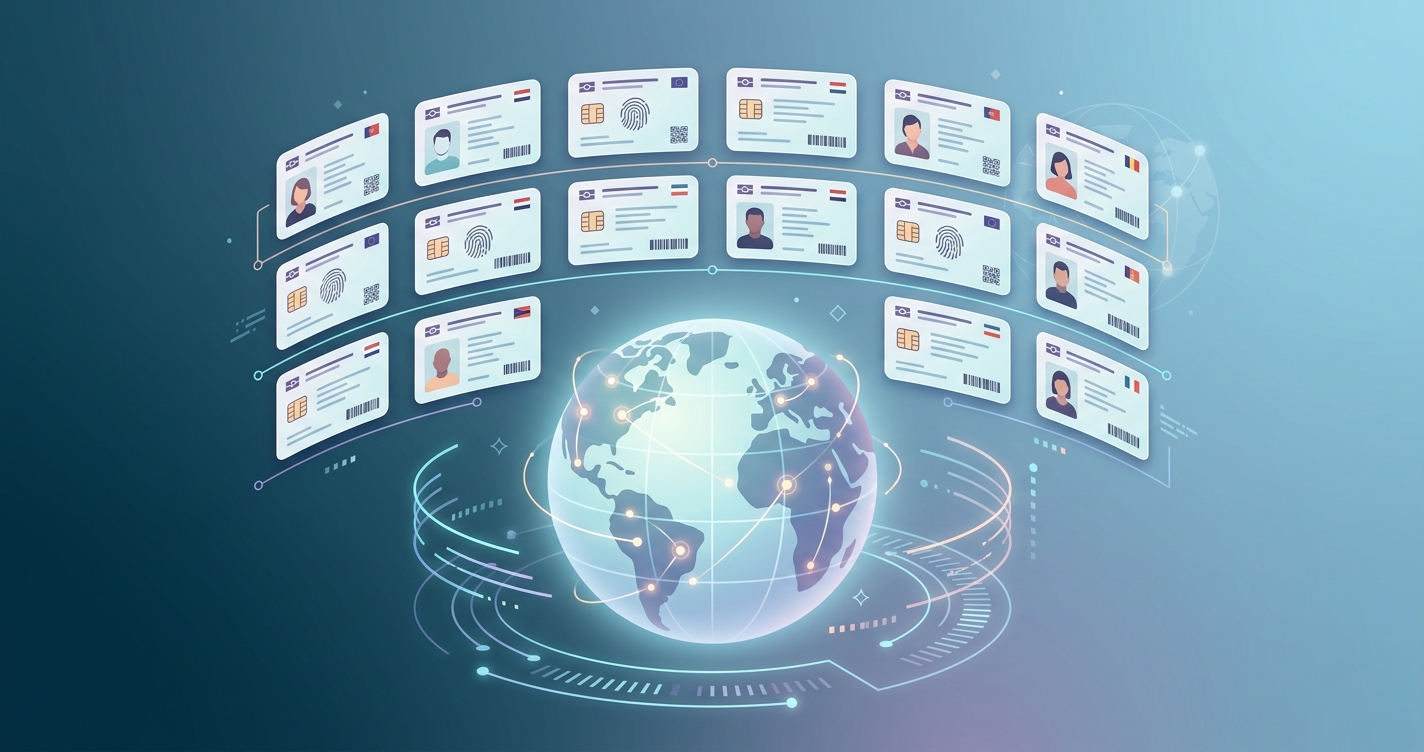
The transition from physical credentials to digital identity infrastructure is redefining how public-sector agencies verify citizens in 2026. As federal and municipal platforms face a surge in synthetic fraud and deepfake injection attacks, reliance on manual document review or legacy password systems has proven insufficient. Public sector decision-makers are actively evaluating government ID verification technology to balance high-assurance security with inclusive citizen access. Central to these modern programs is the deployment of passive biometric liveness, systems that confirm physical presence without requiring complex physical movements, ensuring that essential digital services remain accessible to all demographics while actively rejecting automated spoofing attempts.
"The biometrics in government market is projected to grow from $8.05 billion in 2026 to $13.13 billion by 2030, reflecting an accelerating shift toward frictionless citizen authentication and mandated anti-deepfake controls in national digital identity programs." , Biometrics in Government Market Report, Research and Markets, 2026
Evaluating Government ID Verification Technology in 2026
The current state of government ID verification technology reflects a maturity model moving away from active, challenge-response mechanisms toward passive, continuous validation. Historically, citizen identity proofing required physical branch visits, a process that inherently excluded rural populations and those with limited mobility. When remote proofing was initially introduced, it relied on high-friction online flows where users had to capture multiple angles of their faces, follow moving dots on a screen, or read randomly generated phrases aloud. While somewhat effective against basic presentation attacks, such as an attacker holding up a printed photo or a tablet displaying a static image, these active liveness steps introduced significant usability and accessibility barriers. Elderly citizens, individuals with cognitive or physical disabilities, and users with older hardware frequently failed these checks, leading to unacceptable rates of service denial for critical public services.
In 2026, the baseline expectation for public sector digital identity programs involves sophisticated passive liveness detection. These technologies operate entirely in the background during a standard front-facing camera scan. Rather than relying on the user to prove they are alive through action, the system passively analyzes subtle, inherent human traits. Advanced engines evaluate micro-movements of the facial structure, multi-spectral skin reflectance, or subsurface blood flow. The latter, utilizing remote photoplethysmography (rPPG), detects the imperceptible changes in light absorption as blood pulses beneath the skin. This evolution addresses strict government mandates for accessibility while neutralizing advanced generative AI threats. Digital identity infrastructure is no longer simply about digitizing a physical driver's license; it is about establishing a highly secure, privacy-preserving root of trust that can be invoked repeatedly across different municipal and federal silos without degrading the citizen experience.
| Region / Framework | Primary Implementation Model | 2026 Biometric Identity Posture | Regulatory Standard / Timeline |
|---|---|---|---|
| European Union (EU) | European Digital Identity Wallet (EUDIW) | Centralized wallet infrastructure with mandatory liveness detection for high-assurance onboarding. | eIDAS 2.0 (Mandatory wallet availability by Nov 2026) |
| Singapore | Singpass National Digital Identity | API-driven face-based verification integrated directly into hundreds of government and private services. | Mature continuous deployment; expanding cross-border functionality |
| United States | Decentralized state-level mobile IDs (mDLs) + Federal login portals | Phased adoption of passive biometric validation for remote identity proofing. | NIST SP 800-63 Digital Identity Guidelines |
| United Kingdom | One Login for Government | Consolidating legacy identity schemes into a unified verification gateway with strict anti-spoofing requirements. | UK Digital Identity and Attributes Trust Framework (DIATF) |
The global restructuring of government identity checks is driven by several converging operational pressures:
- Surge in AI-Generated Fraud: Deepfakes and synthetic identities accounted for over 6.5% of online identity fraud attempts in recent sector analyses, forcing agencies to implement sophisticated presentation attack detection capabilities.
- Accessibility Mandates: Governments face legal obligations to ensure digital services are usable by all citizens, heavily penalizing high-friction verification methods that cause session abandonment.
- Interoperability Requirements: Systems like the EUDIW require identity proofs generated in one member state to be technically recognizable and verifiable by another, demanding standardized security baseline checks.
- Cost Reduction: Automating identity proofing drastically reduces the reliance on costly manual document review queues and in-person clerical staffing.
Public sector applications for biometric identity
Welfare and benefits distribution
Government assistance programs are historically prime targets for organized fraud rings using stolen identity data. By integrating passive liveness checks into the enrollment and recurring authentication phases, agencies ensure that benefits are disbursed to the actual, living claimant. This capability prevents automated scripts or fraudsters using stolen credential databases from draining municipal funds, protecting the integrity of the welfare system.
Tax and financial filings
Revenue agencies handle highly sensitive citizen financial data and disburse substantial tax refunds. Unauthorized access to these portals can result in massive financial losses and severe privacy breaches. Modern government ID verification technology establishes a high-assurance binding between the citizen and their digital account, ensuring that only verified individuals can file returns, modify direct deposit information, or access historical tax records.
Healthcare and medical records
National health services and state health insurance portals require rigorous identity verification to comply with strict medical privacy regulations. Biometric liveness allows patients to securely access medical records, register for telemedicine services, and authorize prescription renewals remotely, bridging the gap between rigorous security requirements and patient convenience.
Border control and travel authorization
Modernizing port-of-entry processing relies heavily on secure biometric verification. Automated border control gates (e-gates) and mobile passport control applications utilize facial recognition paired with liveness checks to expedite traveler processing. By verifying that the individual presenting the passport is the authorized credential holder, and ensuring they are a live human rather than someone wearing a sophisticated silicone mask or presenting a deepfake video to a kiosk camera, border agencies can focus human customs officers on high-risk interventions rather than routine identity clerical work.
Current research and evidence
Global research into biometric identity systems continues to validate the necessity of advanced spoof detection. Guidelines published by the U.S. National Institute of Standards and Technology (NIST), specifically within the SP 800-63 Digital Identity Guidelines, classify remote identity proofing requirements and strongly advise the implementation of presentation attack detection (PAD) to achieve higher Identity Assurance Levels (IAL2 and IAL3). The research community emphasizes that without rigorous PAD, biometric systems are highly susceptible to spoofing, degrading the entire trust framework of federal identity systems.
In Europe, the timeline surrounding the eIDAS 2.0 framework has driven extensive technical auditing and peer-reviewed analysis. All EU member states are legally required to make the EUDIW available to citizens by November 2026. Security researchers analyzing the EUDIW architecture have concluded that remote onboarding into these wallets necessitates robust biometric liveness mechanisms. Without this, the system is vulnerable to injection attacks, where bad actors bypass the camera sensor entirely to feed synthetic video streams into the application, binding legitimate citizen data to an attacker-controlled wallet instance.
Furthermore, a 2026 UK Digital Identity Sectoral Analysis published by the government reported that the regional ecosystem includes approximately 275 active firms, with 75% engaged directly in identity or attribute verification. This dense vendor ecosystem reflects the massive public sector demand for sophisticated solutions capable of defending against escalating AI-driven threat vectors.
The future of national digital identity programs
The trajectory of public sector identity proofing points toward completely ambient verification and seamless cross-border interoperability. In jurisdictions like Singapore, the national digital identity framework, Singpass, has already expanded face-based biometric verification into a mature, continuous deployment model. Rather than forcing citizens to create new credentials for every municipal portal, Singpass acts as a centralized authentication layer integrated directly into both public and private sector services via API. This blueprint indicates how national platforms will operate globally by the end of the decade.
In the near future, the act of authenticating will become functionally invisible to the citizen. Emerging technologies like remote photoplethysmography (rPPG) enable systems to confirm life signs simply by analyzing light reflecting off the user's skin during a standard device interaction, without requesting a formal selfie phase or document scan.
Additionally, cross-border interoperability will move from theory to practice. As frameworks like eIDAS 2.0 mature, a verified digital identity established in one nation will be securely portable, allowing citizens to open bank accounts, access healthcare, or interact with public services in neighboring countries using a unified, privacy-preserving credential. The core enabler of this massive regional trust network will remain the initial, highly secure biometric onboarding event.
Frequently asked questions
What is government ID verification technology? It refers to the software and infrastructure public agencies use to confirm that an individual accessing a digital service or physical border is who they claim to be. In 2026, this heavily relies on biometric validation, liveness detection, and cryptographic credential binding.
Why are public sector agencies moving away from manual review? Manual document review is expensive, slow, and increasingly vulnerable to sophisticated digital alterations and deepfakes. Automated biometric systems offer higher accuracy, instant scalability, and a significantly faster citizen experience, reducing the burden on public administration resources.
How does eIDAS 2.0 impact identity verification in Europe? eIDAS 2.0 mandates that all EU member states offer a European Digital Identity Wallet to citizens by late 2026. This requires highly secure, biometrically verified remote onboarding processes to establish trust in the digital wallet ecosystem and ensure cross-border compatibility.
What makes passive liveness detection better for citizen services? Unlike active liveness, which forces users to perform specific motions like smiling or turning their heads, passive liveness analyzes life signs entirely in the background. This dramatically improves accessibility for citizens with physical or cognitive impairments, ensuring equitable access to public services.
For public-sector decision makers scoping identity programs, balancing rigorous security against accessibility mandates is a complex operational challenge. Circadify is addressing this space by providing advanced, passive biometric technologies designed to verify human presence without adding friction to the citizen journey. Government identity teams evaluating infrastructure upgrades can explore our integration guide for public-sector and enterprise deployments here: circadify.com/solutions/fraud-detection.