
Will my online application get approved if I just use a picture of myself?
A research look at whether a static photo passes identity verification, why image-only checks fail, and what presentation attack detection adds.
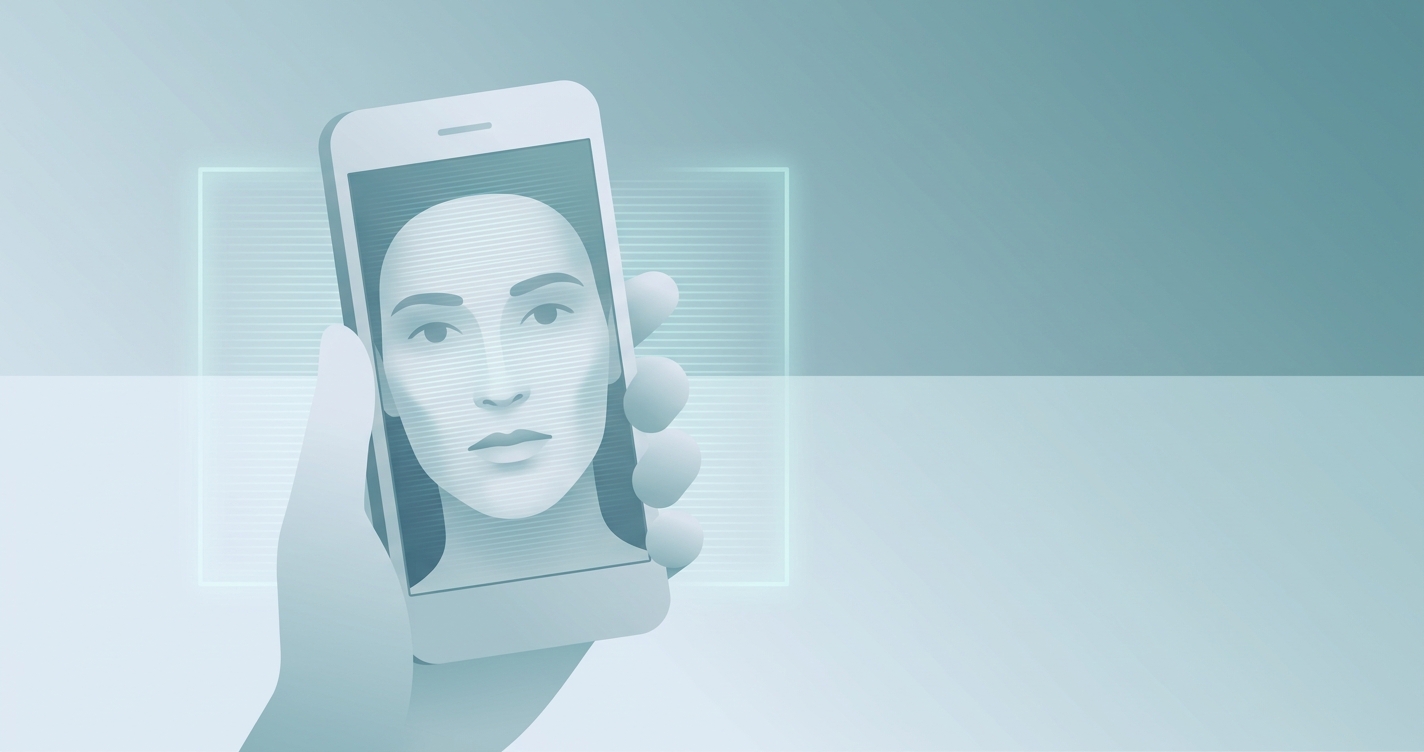
A common assumption among people completing a digital onboarding flow is that a clear headshot is enough to clear the gate. If the camera sees a face that matches the document, the logic goes, the application should sail through. The reality inside modern verification pipelines is more demanding. The question of whether you can use a picture for identity verification has a short answer and a long one: a static image may satisfy a face-match step, but on its own it increasingly fails the security checks that sit alongside that match. For identity platform providers, the gap between "an image that resembles the applicant" and "evidence that a live human is present" is exactly where fraud concentrates.
Document image-of-image was the most common ID document fraud technique in 2023, responsible for 63% of rejected IDs, while selfie spoofing and tampered headshots together accounted for roughly 41% of photo-based fraud attempts, according to fraud telemetry reported by Regula and analyzed across the industry in 2024.
Can I use a picture for identity verification, or does the system see through it?
Whether you can use a picture for identity verification depends on what the verification system is actually measuring. Two separate jobs are happening at once. The first is face matching: comparing the submitted face against a reference, usually the portrait on a government document. A photo can pass this. The second is liveness detection, formally called presentation attack detection (PAD), which asks a harder question: is the thing in front of the camera a real, present human, or is it an artifact such as a printed photo, a screen replay, a paper mask, or a synthetic face?
A static picture is, by definition, a presentation attack instrument when it is used in place of a live capture. ISO/IEC 30107-3, the international standard for biometric presentation attack detection testing, classifies printed photos, displayed images, and screen replays as among the most basic species of attack. Systems that perform face matching without any liveness layer are the ones that approve a picture. Systems built for high-assurance proofing treat an image-only submission as a signal to scrutinize, not to approve.
The distinction matters because attackers exploit precisely the platforms that conflate the two. A face-match-only flow tells a fraudster that any convincing image of the target will work, whether scraped from social media, generated by a model, or photographed from another screen.
Why a clean image is not the same as a present person
The properties that make a photo look good to a human reviewer are not the properties a PAD engine relies on. Detection methods look for evidence of three-dimensional structure, micro-movement, skin texture under varying light, and physiological signals such as blood-flow-driven color change in the face. A flat reproduction lacks the depth cues and the subtle, involuntary signals of a living subject. This is why a sharp, well-lit picture can be more suspicious to a PAD system than a slightly imperfect live capture, because reproductions often look unnaturally uniform.
How image-only checks compare to liveness-backed verification
The table below summarizes how a static-image approach holds up against the layered methods identity platforms now deploy.
| Verification approach | What it confirms | Resistance to a static photo | User friction | Typical fit |
|---|---|---|---|---|
| Face match only | Image resembles reference portrait | Low. A photo passes | Minimal | Low-risk, non-regulated |
| Active liveness (blink, turn, smile) | A responsive subject performs a challenge | Medium. Stops simple photos, struggles with replays and deepfakes | High. Multiple prompts | Step-up checks |
| Passive liveness detection | A real human is present, no action required | High. Analyzes texture, depth cues, physiological signals | Very low. Single capture | eKYC, regulated onboarding |
| rPPG-based passive liveness | Blood-flow signal consistent with living tissue | High. Hard to forge with flat media | Very low | High-assurance, anti-deepfake |
| Document plus liveness binding | Live face tied to validated ID | High. Defeats image and document reuse | Low to medium | Government ID verification |
A few practical takeaways follow from this comparison:
- A picture clears only the weakest tier, and that tier is shrinking as regulators and risk teams raise the bar.
- Active liveness defeats naive photo attacks but adds friction and is increasingly bypassed by injected video and deepfakes.
- Passive liveness detection raises security while removing the prompts that cause applicants to abandon onboarding.
- Binding a live capture to a validated document closes the reuse loophole that plagues image-only flows.
Industry applications
The consequences of accepting a static image differ sharply by sector, which is why presentation attack detection requirements are now written into procurement criteria.
Financial services and eKYC
Banks and fintech platforms operate under Know Your Customer mandates that require reasonable assurance the applicant is genuine and present. An image-only check exposes them to synthetic identity fraud, where a fabricated face is paired with stolen or invented document data. eKYC biometric liveness has become a standard control because it converts a passive face match into evidence of a live enrollment, which examiners and auditors increasingly expect to see documented.
Government ID verification
Public agencies issuing or validating credentials face adversaries with time and motivation. Government ID verification technology that accepts a picture invites credential fraud at scale. Remote identity proofing programs reference frameworks such as NIST SP 800-63A, which treats the binding of a live subject to an authoritative document as central to higher identity assurance levels.
Identity platform providers
For platform vendors selling verification as a service, the ability to reject a photo while approving a genuine applicant is the product. A platform that approves images of people becomes a liability for every downstream customer. Passive liveness, including identity verification rPPG that reads the faint color change of blood flow, lets these providers offer strong presentation attack detection without forcing end users through awkward movement challenges.
Current research and evidence
Independent testing confirms that the gap between image-only matching and liveness-backed verification is real and measurable. The National Institute of Standards and Technology runs the Face Recognition Vendor Test Presentation Attack Detection program (NIST FRVT PAD), which evaluates how well algorithms detect attacks including printed photos and screen replays, reporting results against the ISO/IEC 30107-3 methodology. The program exists precisely because the difference in performance across vendors is wide.
Fraud telemetry reinforces the threat. Industry analysis reported through 2024 found that image-of-image submissions dominated rejected documents, and that selfie spoofing and tampered headshots remained among the most common photo-based techniques. Security reporting on deepfake activity, summarized by Infosecurity Magazine in 2024, described roughly one deepfake-driven identity attack occurring every five minutes, with synthetic media making up about 24% of attempts to defeat motion-based biometric checks. The 2026 Remote Identity Validation Rally (RIVR) results, run under U.S. Department of Homeland Security sponsorship, again showed considerable variability in how liveness solutions perform, underlining that not all detection is equal.
The pattern across these sources is consistent. Static and reproduced images are not a fringe attack but the dominant one, and the defenses that work are those that verify presence rather than appearance.
The future of identity verification beyond static images
Three shifts are reshaping how the industry treats the question of whether a picture is sufficient.
- Generative models are collapsing the cost of producing convincing faces, which erodes any approach that trusts appearance alone and pushes detection toward signals that are hard to synthesize, such as physiological liveness.
- Regulatory expectations are converging on documented presentation attack detection, so image-only checks will struggle to satisfy auditors in regulated onboarding.
- User experience pressure is moving the market toward passive liveness detection, because applicants abandon flows that ask them to perform repeated actions, and conversion data favors single-capture methods.
The endpoint is a model in which a still picture is treated as one data point inside a richer assessment of presence, not as proof of identity by itself. The systems that win are those that can quietly confirm a living human while asking the applicant to do almost nothing.
Frequently asked questions
Can I use a picture for identity verification on most platforms today? You can submit an image, but on platforms with any liveness layer it will not be enough on its own. Face matching may pass, while presentation attack detection treats a static photo as a likely attack and flags or rejects it.
Why do some applications reject a clear, high-quality photo? Image quality is not the issue. Liveness systems look for depth, micro-movement, skin texture under light, and physiological signals such as blood flow. A flat reproduction lacks these, so a crisp photo can actually look more like a spoof than a live capture.
Is passive liveness more secure than asking me to blink or turn my head? Passive liveness analyzes signals present in a normal capture without prompts, which removes user friction and avoids the replay and deepfake weaknesses that affect action-based challenges. Independent programs like NIST FRVT PAD evaluate these methods against standardized attacks.
What is presentation attack detection? It is the formal name for the technology that determines whether a biometric sample comes from a live person or an artifact such as a printed photo, a screen, or a mask. It is defined and tested under the ISO/IEC 30107-3 standard.
For identity platform providers building toward presentation attack detection that resists photo, screen, and deepfake attacks without adding friction, Circadify is developing passive liveness detection that confirms a real, present human from a single capture. Teams evaluating how to close the image-only gap can review the integration guide for a closer look at applying these checks across remote identity proofing flows.